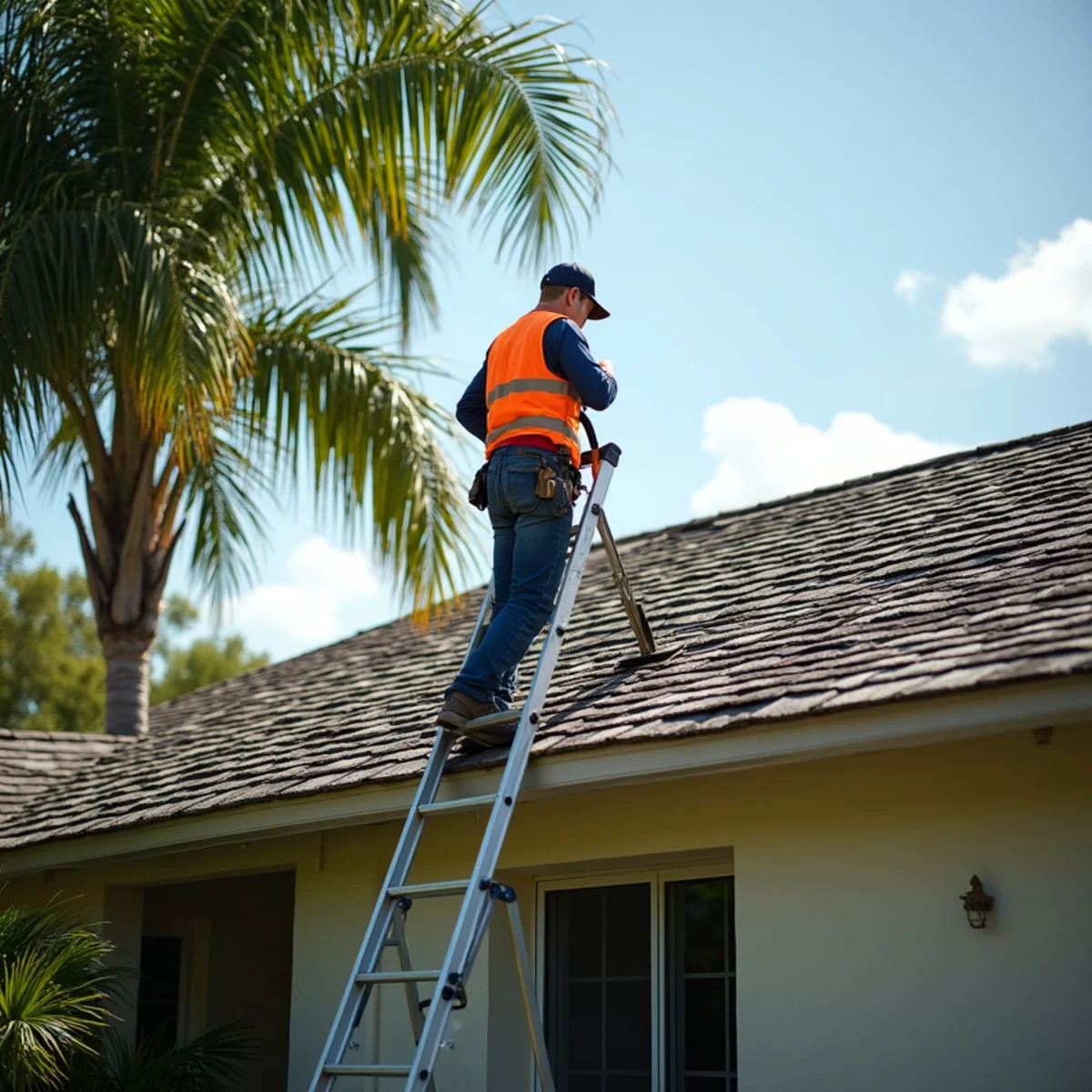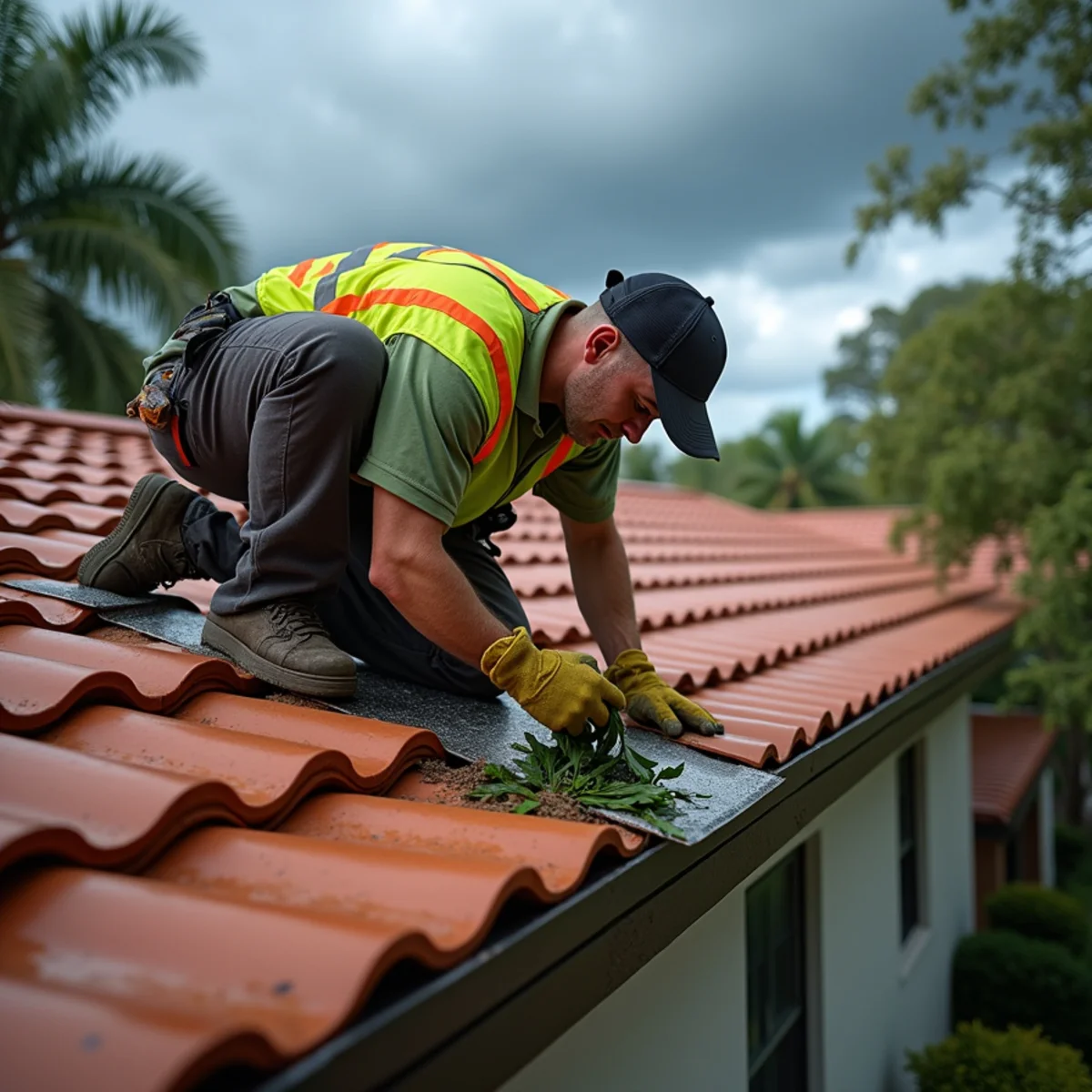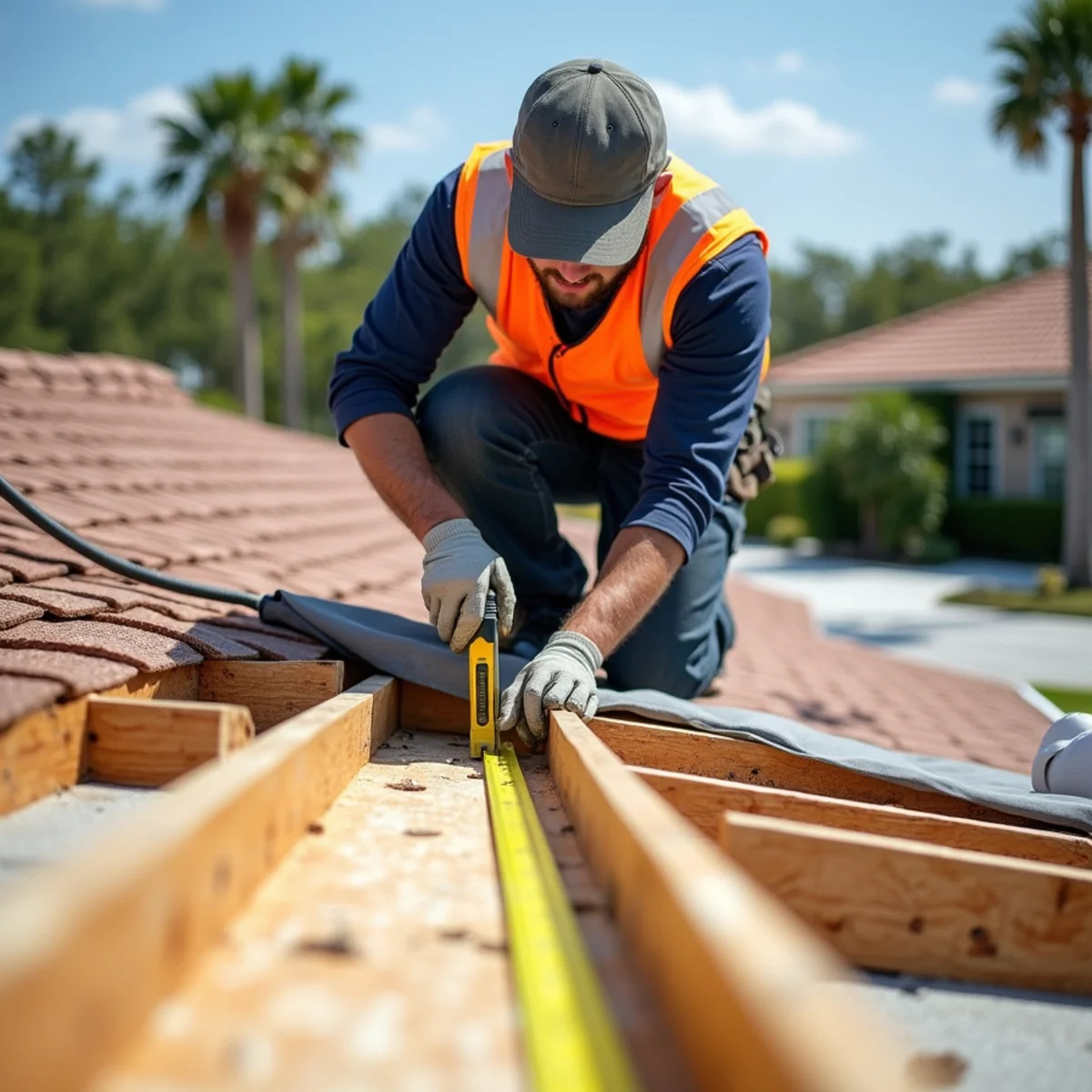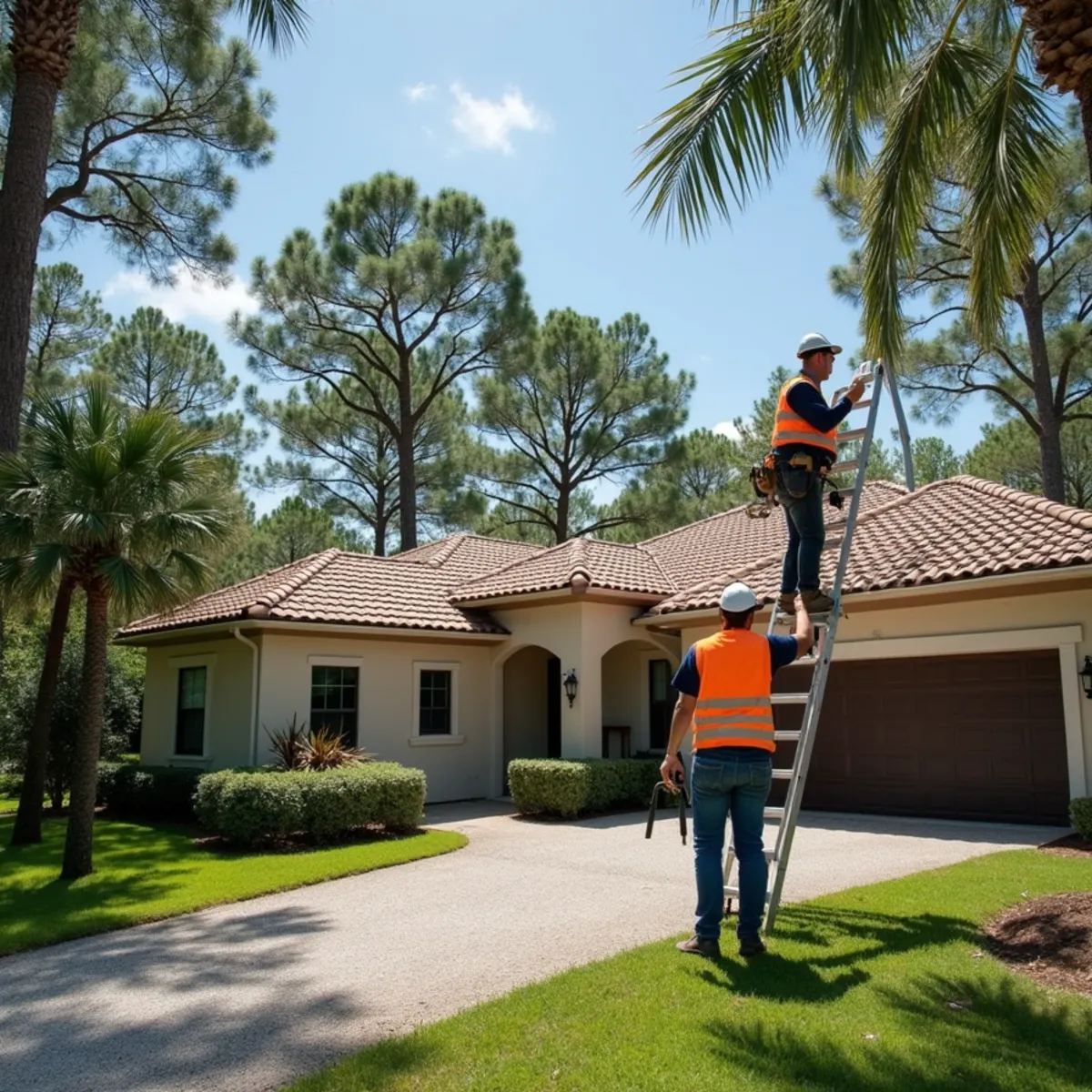
A hurricane season roof checklist for Palm Beach County comes down to five jobs finished before June: walk and photograph the roof from the ground, trim trees and clear gutters, have a roofer secure tiles, caps and flashing, brace weak openings like garage doors and soffits, and gather your policy, permit and wind mitigation records.
Hurricane season runs June 1 through November 30, and the best time to prepare your roof is before the first system forms in the Atlantic. The work is mostly simple: look carefully, fix small problems while they are still small, and document what you have. If you are reading this mid-season, the list still applies. Start now rather than when a storm appears in the forecast and every roofer in Palm Beach County is booked.
From the Ground: A 20-Minute Walk-Around
You can learn a lot without a ladder. Walk each side of the house with binoculars or your phone camera zoomed in.
- Look along ridges and hips for gaps, missing caps, or cracked mortar
- Scan tile fields for cracked, slipped, or missing tiles, especially near edges
- On shingle roofs, look for lifted tabs, missing pieces, or bare patches where granules are gone
- Check that drip edge and fascia are straight and fastened
- Note any stains or streaks on the soffit, which can signal water running behind the roof edge
- Look at vents, pipe stacks, and any satellite or solar mounts for anything loose
Take dated photos of each side. Those photos become your pre-storm baseline.
Then go inside. With a flashlight, check ceilings in each room, around recessed lights, and inside closets on exterior walls. If you can safely reach the attic hatch, look for stains on the underside of the deck, rusted nail tips, and daylight around pipes. An old stain is not always an active leak, but mark it with the date so you can tell whether it grows after the next storm.
Around the Roof: Trees, Gutters and Loose Items
Many roof losses start with something other than the roof itself.
Trim Trees
Limbs hanging over or brushing the roof should be cut back well before peak season. Wind turns branches into battering rams, and a falling limb can break tile, puncture decking, or tear off gutters. Hire a licensed tree service for large limbs and anything near power lines.
Clear Gutters and Downspouts
Clogged gutters overflow in tropical rain and can push water behind the fascia. Clear them and make sure downspouts discharge away from the foundation.
Plan for Loose Items
Patio furniture, planters, grills, and decorations become projectiles in high wind. Decide now where each item will go when a storm approaches. Remove or secure anything attached near the roof, like an old antenna mount.
Openings That Protect the Roof: Garage Doors and Soffits
A roof can be lost from the inside. When a large opening fails, wind rushes in and pushes up on the underside of the deck while suction pulls on the outside. The two forces add together, and a roof that would have held can lift.
- Garage door: On many homes it is the largest opening. If yours is not wind-rated, ask a garage door company about a rated replacement or a retrofit bracing kit, and check the door’s label or paperwork for its design pressure.
- Soffit panels: Loose vinyl or aluminum soffit can blow out or in, letting wind and wind-driven rain into the attic. Panels that rattle or sag should be refastened; building-safety groups such as FLASH describe simple ways to brace them.
- Ridge vents and turbines: Have the roofer confirm they are fastened tightly and that the vent products are rated for wind-driven rain where required.
- Gable-end vents: Sideways rain can pour through louvers designed only for falling rain. Note any past staining under them in the attic.
None of this replaces a sound roof, but a strong roof over a weak garage door is still at risk.
On the Roof: What a Professional Should Check
Some items need a roofer on the roof. A pre-season inspection should cover:
- Tile attachment, with loose or slipped tiles reset
- Hip and ridge caps secured, with cracked mortar or failed foam addressed
- Flashing at walls, chimneys, and skylights resealed where needed
- Pipe boots checked for cracks or gaps
- Valley metal cleared of debris and inspected for rust
- Soft spots in the deck identified before wind loads them
A professional roof inspection with a written report also documents the roof's condition before any storm, which can help separate existing wear from new damage later.
Small fixes found during the inspection are usually quick. Resetting a few tiles or replacing a pipe boot through routine roof repair now costs far less than dealing with an opening in the roof after a storm drives rain through it.
Do not wait for a storm watch to call a roofer. Once a system is on the forecast track, schedules fill quickly and materials can run short.
Paperwork: Know What You Have
Preparation includes your records.
- Insurance policy: Know your hurricane deductible, which is often a percentage of dwelling coverage rather than a flat dollar amount. Confirm what your policy says about additional living expenses.
- Roof documents: Keep the roof permit, installation date, product information, and your latest wind mitigation report together, on paper and in cloud storage.
- Photos and video: Store your pre-season roof photos and a walk-through video of the interior off-site.
- Contacts: Write down your insurer's claim line, your agent, and your roofer's number somewhere you can reach without power.
A Tarp Plan
If a storm opens your roof, the first goal is stopping more water from getting in. Decide in advance who you will call for emergency roof tarping. A tarp secured with battens and fasteners holds far better than one thrown over the roof and weighed down with blocks.
Stay off the roof during and right after a storm. Wet tile, loose debris, and damaged decking make footing dangerous, and a fall is a far bigger problem than a leak.
Rural Lots Need a Wider Walk
On large parcels like those in Loxahatchee Groves, homes often sit among tall pines and oaks, with barns, sheds, and open ground that lets wind build speed. Loose items spread across a bigger property, such as fencing materials, equipment, and outbuilding roof panels, can strike the house. Walk the whole property, not just the yard around the house, and secure or store anything that can move.
Unpaved roads and longer distances can also slow crews after a storm, which makes finishing inspections and repairs before the season even more valuable out west.
During the Season
Roof preparation does not end in June.
- After each storm, do a ground-level walk-around and photograph anything that changed
- Clear gutters and valleys after heavy debris
- Check ceilings and the attic after heavy rain for new stains
- Handle small issues promptly instead of waiting for the next storm
A Month-by-Month Timeline
- March and April: Book the professional inspection and get tree-service quotes while schedules are open and the weather is dry.
- May: Complete repairs, trimming and gutter cleaning. Take your baseline photos after the work is done.
- By June 1: Records gathered, loose items planned for, tarp contact written down.
- August through October: The busiest stretch of the season in most years. Re-walk the property after every tropical system, even one that passes offshore.
- December onward: If the inspection pointed toward replacement, plan it for the drier months before next season.
What We See After Storms That a Spring Check Would Have Caught
After a storm passes, the damage we get called about often started as something small that was already there. A few examples come up again and again:
- Coconuts and fronds on tile. Coconut palms beside the house drop heavy nuts and dead fronds that crack tile long before a hurricane arrives. Trimming the fruit clusters is part of roof prep.
- Lifting edge metal. A drip edge that has pulled loose gives wind something to grab. Once the edge peels, the first course of tile or shingle often follows.
- Abandoned mounts. An old dish or antenna bracket that nobody uses can rip out and leave open screw holes in the deck.
- Last year’s tarp. A tarp left in place past its useful life breaks down in the sun, traps water and flaps loose in the next storm.
- Gutters hung from tired fascia. When soft fascia gives way, the gutter can tear off and pull the edge of the roof with it.
There is a real trade-off when the roof is simply old. Starting a full replacement in May can leave the house open under underlayment during early-season storms and a busy permit queue. Many owners in that position choose targeted repairs to get safely through the season, then replace the roof in the drier months. That is a reasonable call when the repairs are sound and documented, but it is not the right answer for a roof with widespread soft decking.
Start Your Checklist Now
A prepared roof is not a guarantee against hurricane damage, but it gives your home a much better chance. Rising Roof Services inspects and repairs roofs across Palm Beach County before and during hurricane season. Call (831) 666-1600 to schedule a pre-season inspection or any repairs your checklist turns up.
Frequently asked questions
When is the best time to schedule a pre-hurricane roof inspection?
April and May are ideal because the weather is usually drier and roofers have more open schedules before the season starts on June 1. That leaves time to complete any repairs before storms arrive. If you missed that window, an inspection during the season is still worthwhile, especially before the historically active weeks of late summer and early fall.
Should I put hurricane straps on my roof before the season?
Adding roof-to-wall connectors to an existing roof is usually practical only when the roof deck is opened, such as during a re-roof, because access to the top of the walls is limited. Before the season, focus on securing tiles, hips and ridges, flashing, and trees. If a re-roof is coming, plan connectors and other wind upgrades as part of that project.
Can I change my homeowners policy once a storm is in the forecast?
Often not. Insurers commonly stop writing new coverage or accepting changes, such as a lower hurricane deductible or higher dwelling limit, once a named storm threatens the area. These pauses are sometimes called binding suspensions. Review your policy and make any changes in spring, when you do the rest of your preparation, and ask your agent how their company handles storm-related restrictions.
What roof-related supplies should I keep on hand for hurricane season?
Keep supplies for the inside of the house rather than for climbing up. Buckets, plastic sheeting, towels, a utility knife, a flashlight, a charged power bank and a printed contact list cover most leak situations. A tarp can be useful for a roofer to install, but leave rooftop work to a crew with the right fasteners and fall protection once the storm has passed.