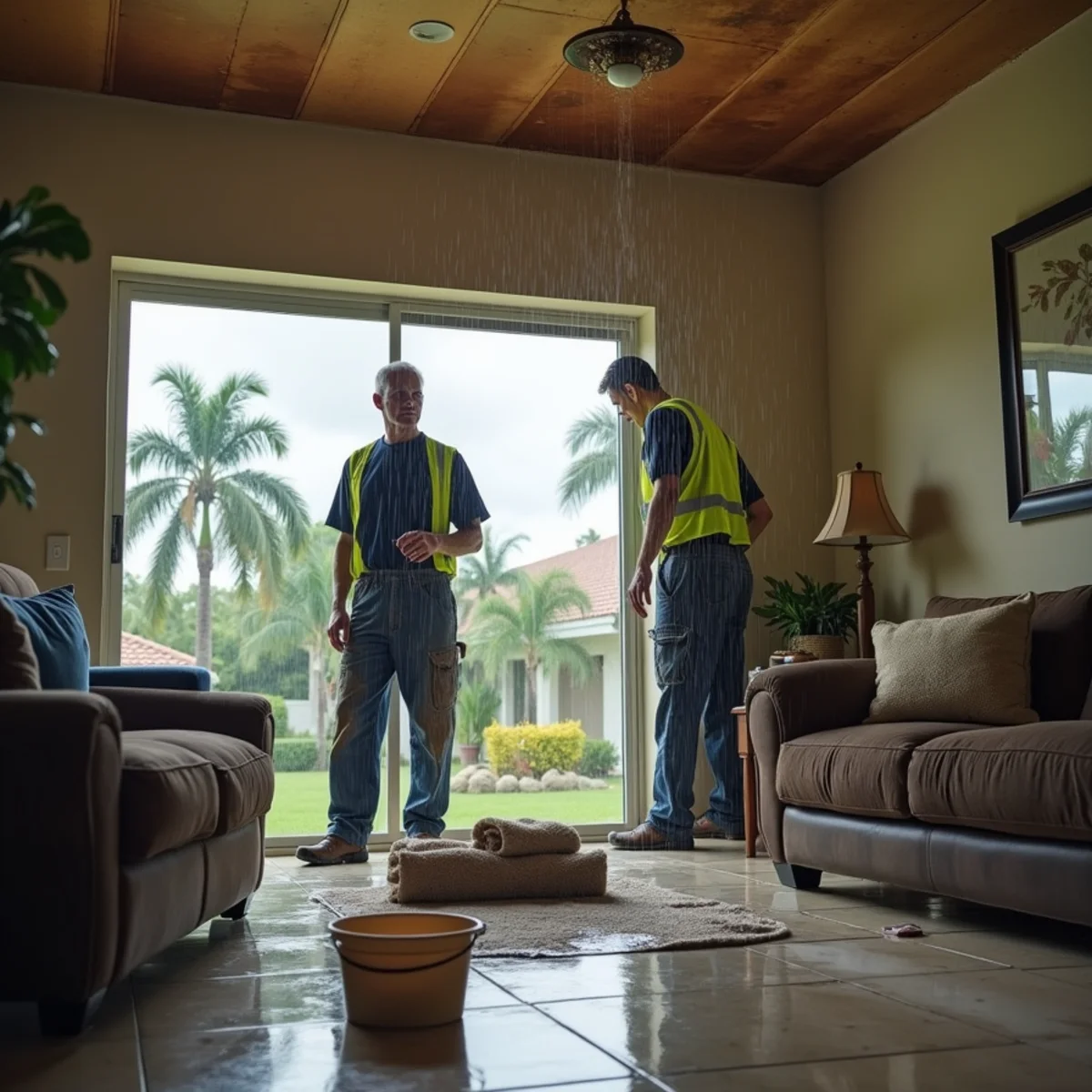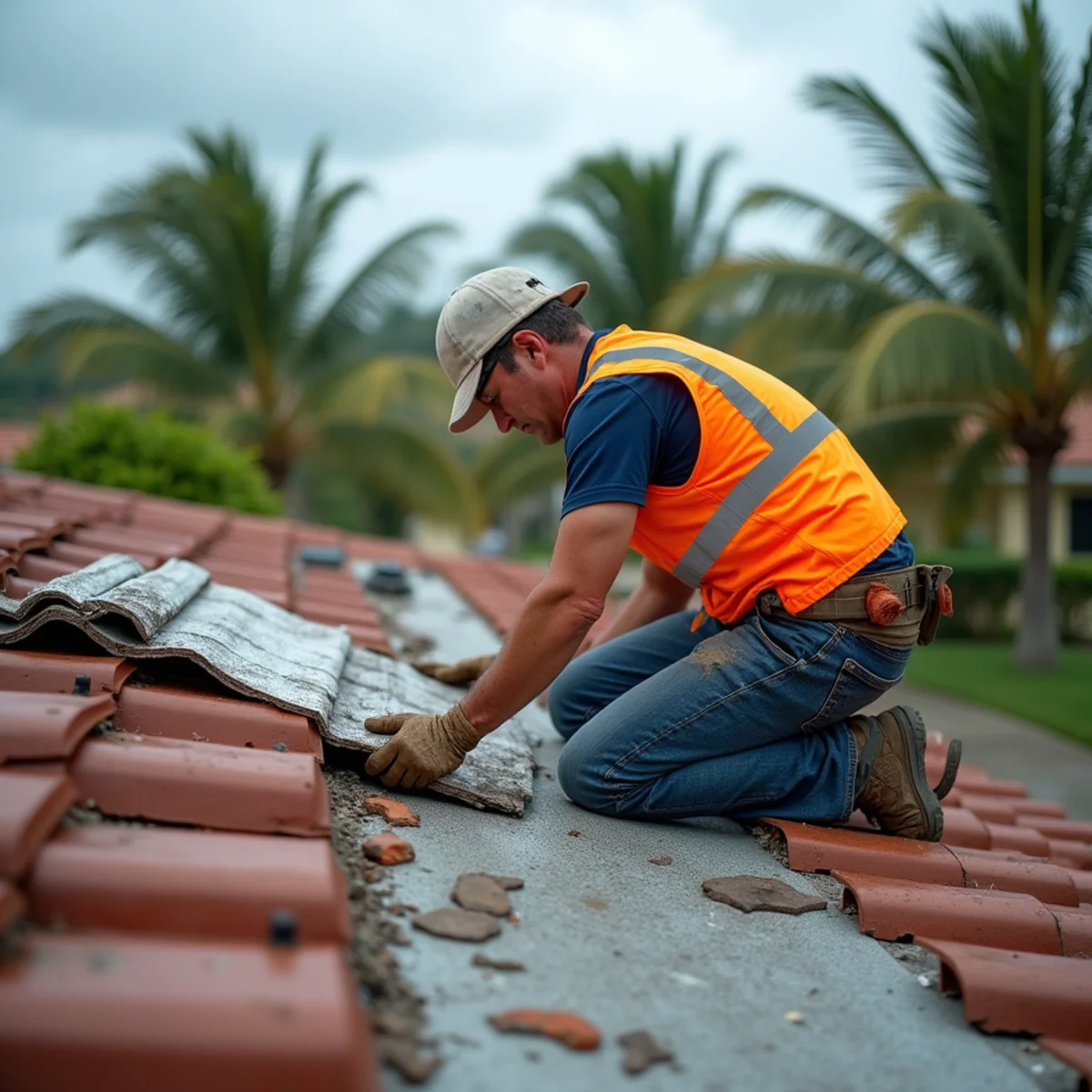
Storm damage roof repair in Boca Raton is mostly wind work: fixing shingles whose seal strips broke, concrete tiles that cracked or slid, edge metal that peeled up and spots where a limb or palm frond punched through. Rising Roof Services finds each damaged area, photographs it, and repairs it with matched materials before the next afternoon storm can drive water through the gap.
Most roof damage in Boca Raton doesn’t come from a named hurricane. It comes from the July squall line that builds over the western suburbs and pushes gusts hard enough to break a shingle’s seal or snap the nose off a concrete tile. The roof may look fine from the driveway, and the problem shows up weeks later as a brown ring on the ceiling.
Storm damage repair starts with finding everything the wind touched, not just the obvious piece on the lawn. We check shingles that lay back down but lost their adhesive bond, lift suspect tiles to look at the underlayment below, and follow torn flashing to wherever water can slip behind it. If water is already coming in, we pair the visit with emergency roof tarping so the interior stays dry until the repair is done.
Each repair is photographed before, during and after. That record matters if you open a claim, and our roof insurance claim help page explains exactly where our role starts and stops.
Reviewed by the Rising Roof Services team · Boca Raton, FL
Signs Your Roof Took Storm Damage
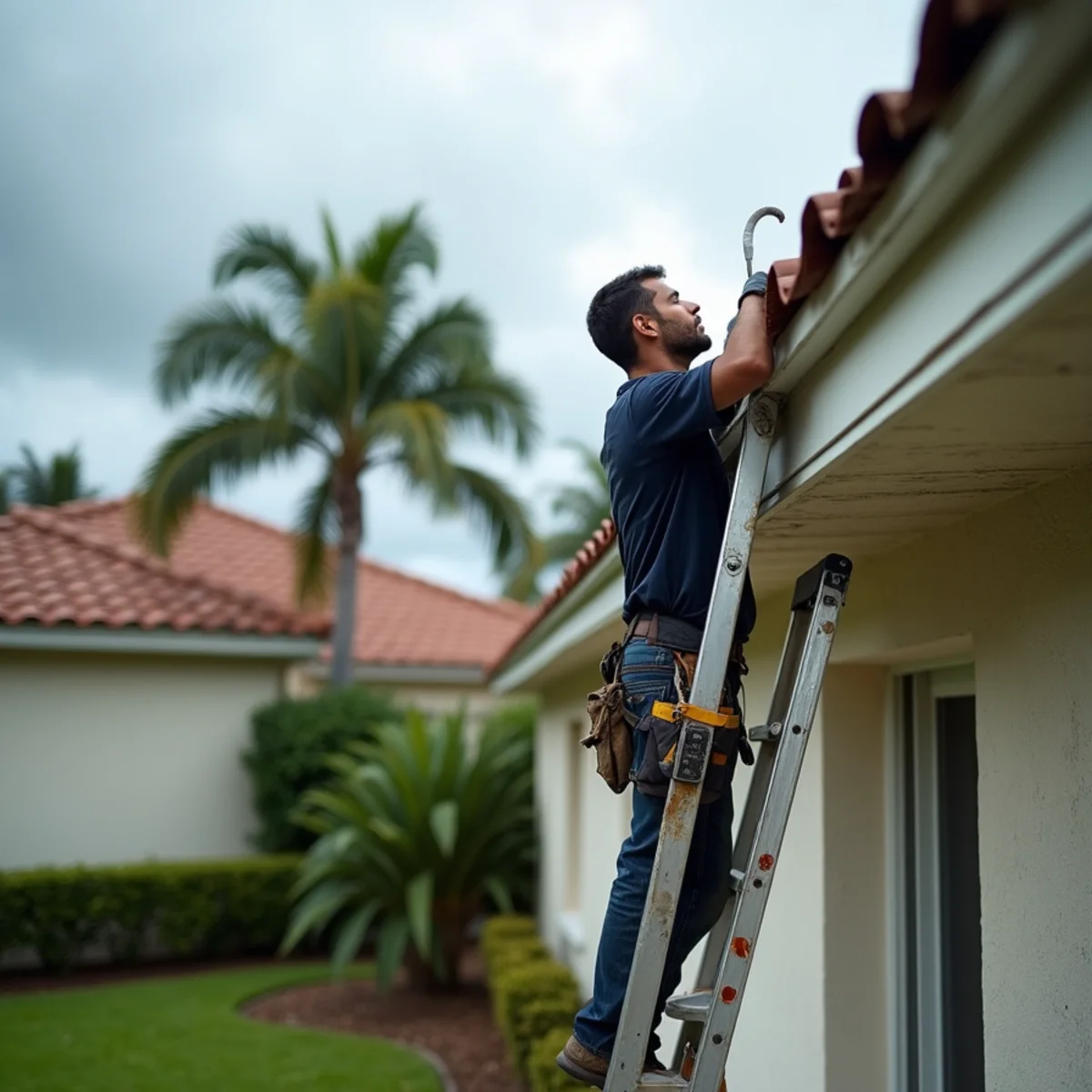
Some storm damage is obvious. Much of it isn’t, especially on tile roofs, where a cracked piece can sit in place for months. Watch for these:
Creased shingle tabs
A shingle that flapped in the wind settles back with a faint crease near the nail line and a broken seal strip, ready to peel away in the next gust.
Tile chips in the gutter or on the patio
Concrete tile rarely falls whole. Corners and fragments below the eave usually mean a tile higher up is cracked, slipped or missing its nose.
Shifted hip and ridge caps
Hips and ridges take the heaviest uplift on the roof. Once mortar or foam releases, caps slide and expose the ridge underlayment.
Bent drip edge or lifted flashing
Edge metal peeled upward gives wind-driven rain a path under the first course of roofing and into the fascia board.
A sudden pile of granules
Heavy granule wash at the downspouts after one storm points to impact or scouring, not normal aging.
Leaks that only appear with sideways rain
When a spot drips only when rain blows from one direction, look for a lifted edge, loose pipe boot or broken tile on that side of the house.
What’s included in a storm damage roof repair
Squall damage hides in the same few places on almost every roof, so the visit is built around checking all of them, not just the spot you noticed.
Edges, corners and ridges checked first
Wind pulls hardest at eaves, rakes, hips and ridge lines. We work those zones slope by slope before moving to the field of the roof, because that is where a gust usually finds its way in.
A hand test on every suspect shingle
A tab that lost its adhesive bond can lie flat and look normal. We lift suspect tabs gently to see whether the seal strip let go or a nail backed out, and note each one on the photo map.
Tile lifted where the damage points
Cracked, slipped or nose-broken tiles come up so we can see the underlayment and the foam or mortar bond beneath them, which decides whether a tile swap is enough.
Impact points traced to the deck
Where a limb or flying debris hit, we look for a fractured deck board or a puncture in the membrane under the covering, and check the attic below it when there is access.
Same-visit dry-in for open spots
If an area can’t be permanently closed that day, it is dried in or covered before the crew leaves, so an evening storm doesn’t undo the work.
Matched repair and resealed flashing
Replacement shingles are wind-rated and matched by line and color where they’re still made; tile is matched by profile and color. Lifted drip edge, pipe boots and counterflashing are refastened or replaced.
A dated storm-versus-wear photo record
You get labeled before-and-after photos that separate fresh storm damage from older wear, plus a cleanup pass for tile fragments, shingle scraps and nails around beds, pool decks and the driveway.
How We Handle Storm Damage Repairs
The aim is a repair that holds for the rest of the season.
- 1
Ground and roof walk
We photograph every elevation from the yard first, then walk the roof slope by slope. On tile, we step only where tile is supported so we don’t create new breaks.
- 2
Lift and look
Suspect shingles are checked for seal and nail holding. Suspect tiles come off so we can see whether the underlayment beneath is torn, wet or already failing.
- 3
Temporary cover if needed
Openings that can’t be closed the same day are dried in or tarped so the next storm doesn’t add interior damage.
- 4
Matched repair
Shingles get a compatible wind-rated match and tile the closest available profile and color. Hips and ridges are reset and flashing resealed or replaced.
- 5
Photo report
You receive before-and-after photos with a written description of what was damaged and what we did about it. Each finding carries an urgency rating, so you can see what needed attention first and what can be planned.
What Affects the Cost of Storm Damage Repair
Two roofs hit by the same squall can need very different work, which is why storm repairs vary so much. The main cost drivers:
- Roof covering
- Concrete and clay tile repairs take more labor per square foot than shingle work, and discontinued tile profiles may require sourcing salvage pieces.
- Hidden underlayment damage
- If lifting tile reveals torn or saturated underlayment, the repair expands to include new peel-and-stick in that area.
- Deck condition
- Soft plywood or rotted 1x6 boards under the damaged section must be cut out and replaced before new roofing goes on.
- How many slopes were hit
- Wind usually punishes one or two faces of a roof. Damage spread across every slope means more setup, material and time.
We provide a written, itemized scope before work starts, so you can see exactly what is being repaired and why. For general budgeting context, see our Boca Raton roof cost guide.
Why choose Rising Roof Services for storm damage roof repair
A callback the day you report storm damage
Storm and leak calls are returned the same day, and our Google Business Profile lists the office as open 24 hours. The first priority is getting open areas covered, then scheduling the full repair.
Storm damage and old wear kept apart
Each photo in the report is tagged as confirmed or suspected, and as likely storm-related or age-related. That honesty protects you if an adjuster looks at the same roof.
Close to the squall belt
Afternoon storms often build over the western suburbs. From Woodfield Plaza, crews reach Boca Del Mar, Sandalfoot Cove and Mission Bay quickly, which matters when several roofs on one street were hit by the same cell.
Reviewed for quick, tidy repairs
Our 5.0 Google rating across 31 reviews includes homeowners describing fast leak fixes and broken shingles swapped out without delay, with crews that tidied up and talked them through the work. The repair price is set in an itemized scope you approve first.
5.0 stars from 31 Google reviews · Open 24 hours, 7 days · (831) 666-1600
Storm Damage or an Aging Roof?
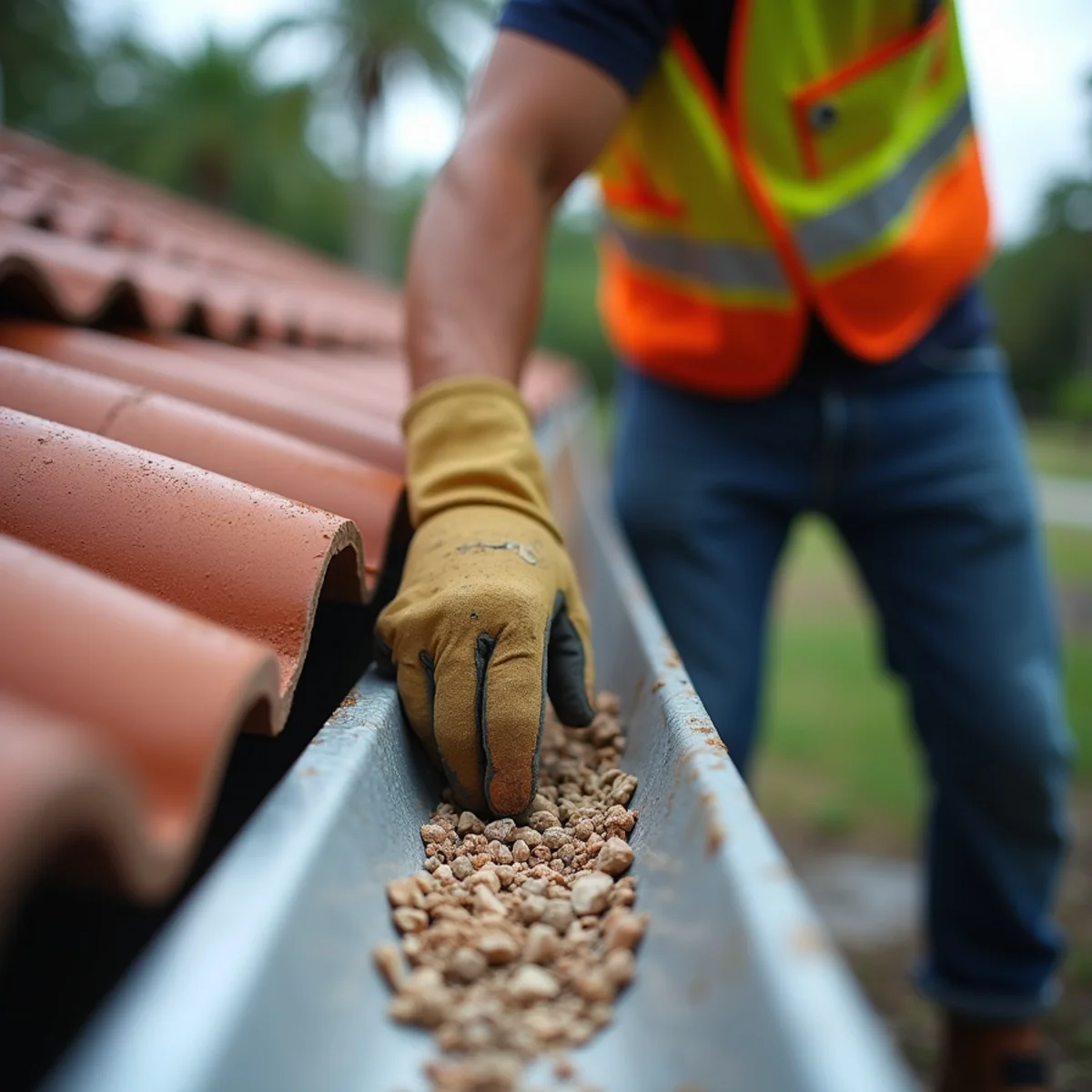
Not every problem found after a storm was caused by it. Brittle shingles in Sandalfoot Cove or original felt under tile in Mission Bay may have been failing long before the wind arrived. We note which issues look storm-related and which look like wear, because blurring the two helps no one.
Our guide to spotting storm damage on shingles vs. tiles covers what you can safely check from the ground before calling anyone.
When a Repair Isn’t Enough
When damage covers a large share of the roof, patching may stop making sense. Under Florida’s 2022 change to the 25% rule, roofs installed under the 2007 code or later usually need only the repaired area brought to current code, while older roofs may still be pushed toward replacement. The building department has the final word, and if replacement is the better call, we’ll scope a tile roof replacement instead.
Sorting Storm Damage by Urgency
Wind uplift is the force wind creates when it tries to lift roofing away from the house. It pulls hardest at eaves, rakes, corners and ridges, which is where squall damage clusters. Debris damage shows up wherever a limb landed.
We sort every finding into three groups and put that ranking in a written condition report with labeled photos and a repair-or-replace recommendation.
- Fix now: open decking, a missing ridge run, or any spot where water is reaching the attic. These get dried in on the same visit when conditions allow.
- Fix before the next heavy rain: cracked or slipped tile over intact underlayment, creased shingle tabs and loose pipe boots.
- Monitor: chipped tile edges, light granule loss and old staining with no active moisture.
The First 30 Minutes After a Storm Leak
EPA guidance says to dry wet building materials inside a 24-to-48-hour window to hold off mold, so the clock starts when the drip does.
- Stay off the roof while it’s wet, windy or lightning is still in the area.
- Move furniture and electronics away from the drip and set out buckets and towels. If a ceiling is bulging, clear the room below it.
- Photograph the ceiling, walls and any roofing on the ground, one wide shot and one close-up each.
- Note when the leak started and which way the wind was blowing. That points to the side of the roof to check first.
- Arrange drying and a roof assessment the same day if insulation or drywall is wet. Roof leak repair then traces the entry point, not just the stain.
Wind, Debris, Lightning and Hail: What Each Leaves Behind
“Storm damage” covers several different forces, and each one marks a roof in its own way. Knowing which one you’re dealing with tells us where to look and what the repair will involve.
- Straight-line gusts break shingle seal strips along the leading edge and lift tile at the first course and the hips. Damage lines up on the windward side of the house.
- Falling limbs and palm fronds leave impact points: a spider-cracked tile, a torn shingle or, with a heavy limb, a fractured deck board that has to be cut out and replaced from below the covering.
- Lightning is common in South Florida summers. A strike near a vent stack, satellite mount or solar rack can scorch underlayment or blow out tiles, so we check penetrations closely after a nearby hit.
- Hail shows up in Boca far less often than wind damage, though strong summer cells can drop it. On shingles it shows as dark bruises where granules were knocked loose; on concrete tile it tends to chip exposed edges.
Hiring a Roofer After a Storm: Red Flags to Watch
Big storms bring out-of-area crews and door-to-door sales pitches to Boca neighborhoods within days. Most people knocking mean well, but a few habits are worth screening for before anyone climbs your roof.
Check any contractor’s license on the Florida DBPR site, myfloridalicense.com, and ask where the company is based. Ours is at Woodfield Plaza, and you’re welcome to stop by.
- An offer to “cover” or waive your deductible. Rebating or waiving a deductible is illegal in Florida, and a roofer who offers it is inflating the bill somewhere else.
- Paperwork that hands over your claim. State law now limits assignment-of-benefits contracts on newer residential policies (those written from the start of 2023), so read any form that shifts your claim rights to a contractor before you sign it, and ask your agent if you’re unsure.
- A price with no scope. A number without an itemized list of what will be replaced, and with what, leaves you nothing to compare or hold anyone to.
- Pressure to sign on the spot. A real storm repair can wait a day for you to read the paperwork, as long as open areas are covered in the meantime.
Storm Damage Roof Repair near you
Based at Woodfield Plaza in Boca Raton, we provide storm damage roof repair across West Boca and nearby communities, including:
Storm Damage Roof Repair FAQs
Should I get my roof checked after every summer storm?
Not after every shower, but it is worth a look after any storm with strong gusts, hail or flying debris, or if you find tile pieces, shingle tabs or granules in the yard. If you see an interior stain or damp insulation, call sooner rather than waiting for the next rain to confirm it.
Can you match my existing roof tiles?
Often, though not always perfectly. Many concrete tile profiles used in 1980s and 1990s West Boca subdivisions have been discontinued or re-colored. We look for current production matches first, then salvage stock. When a close match isn’t possible, one option is to borrow tiles from a less visible slope for the repair and install the new tile where it won’t be noticed.
Is it safe to walk on my tile roof to look for damage?
We don’t recommend it. Concrete tile cracks under a misplaced foot, wet tile is slick, and a fall from even a single-story eave can cause serious injury. Take photos from the ground or an upstairs window instead, and leave the roof walk to a crew that knows where tile is supported.
Do I need a permit for a storm damage repair?
Small repairs often don’t need one, but larger ones can. The threshold depends on the scope of work and on whether your address falls under the City of Boca Raton or unincorporated Palm Beach County, since each has its own building department. When a permit is needed, we pull it and schedule the required inspections as part of the job.
Can a roofing contractor help document storm damage?
Yes. We take dated wide and close photos of each affected slope, note the likely cause of each problem, and separate fresh storm damage from older wear in a written report you can share with your insurer. We can’t decide coverage or promise a claim result. That stays with your insurance company and your policy.
Can wind damage a roof without blowing anything off?
Yes, and it is one of the most common findings after a Boca squall. A gust can lift a shingle tab far enough to break its adhesive seal, then let it settle back flat. Tile can crack in place or lose its foam or mortar bond without moving much. Neither shows from the ground, which is why a hands-on check of the windward slopes is worth doing after a strong storm.
How long can I wait before repairing storm damage?
Open areas, missing ridge caps and anything letting water into the attic should be covered the same day and repaired before the next heavy rain. Cracked tile over sound underlayment or a few creased shingle tabs can usually wait days to a few weeks, but not through the rainy season. Waiting also makes it harder to show which damage came from which storm if you file a claim.