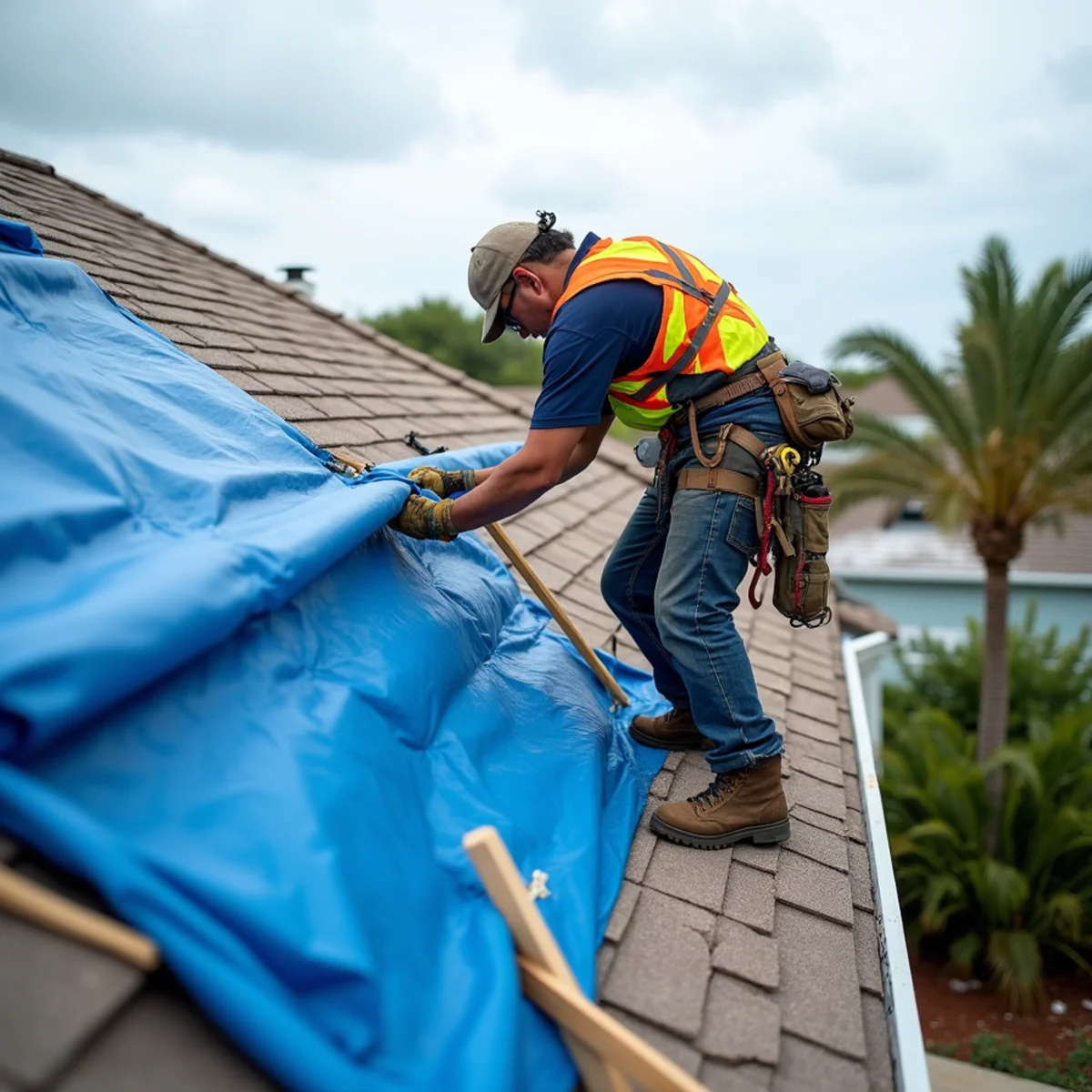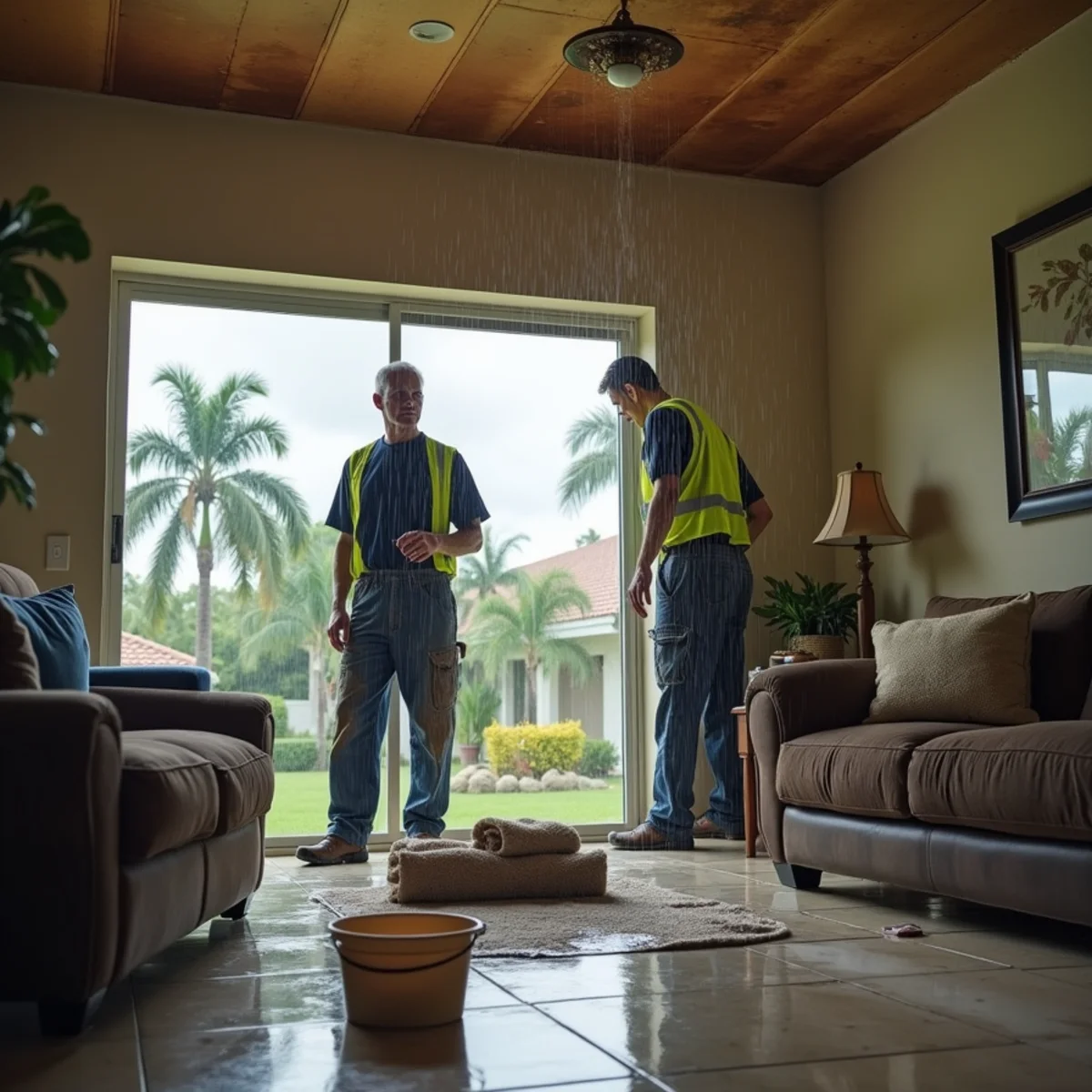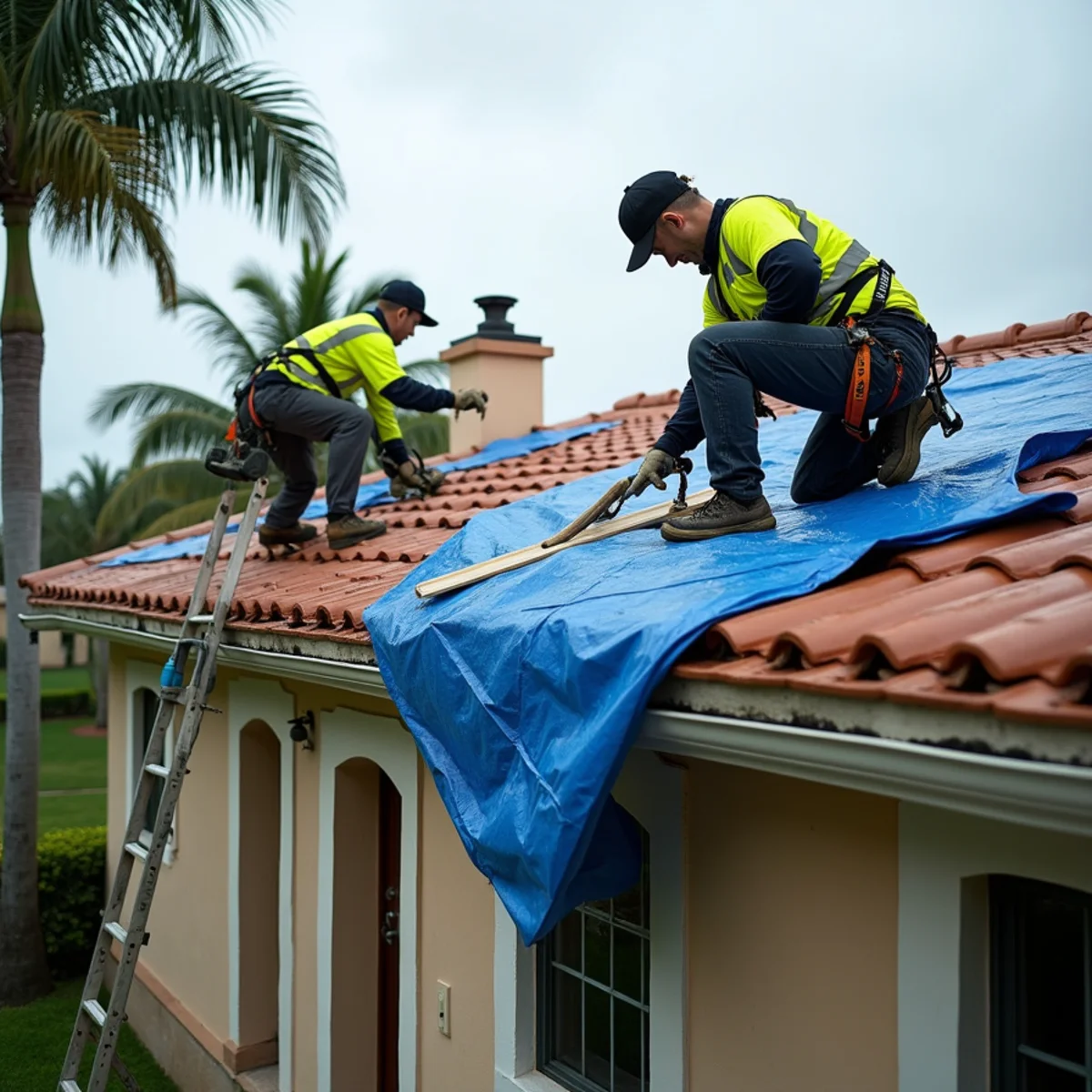
Emergency roof repair in Boca Raton is about stopping water and making the roof safe first, then fixing it properly once the weather allows. Rising Roof Services returns leak and storm calls the same day, stabilizes the damaged area with a tarp or temporary dry-in, and photographs everything before the permanent repair is scoped.
Roof emergencies come in two kinds: water is coming in right now, or something has broken that will let water in with the next storm. A palm frond through a skylight, a run of shingles peeled back by a squall, hip tiles scattered across the driveway, a limb resting on the deck. Each needs a quick, safe response before it turns into a ceiling, flooring and drywall problem.
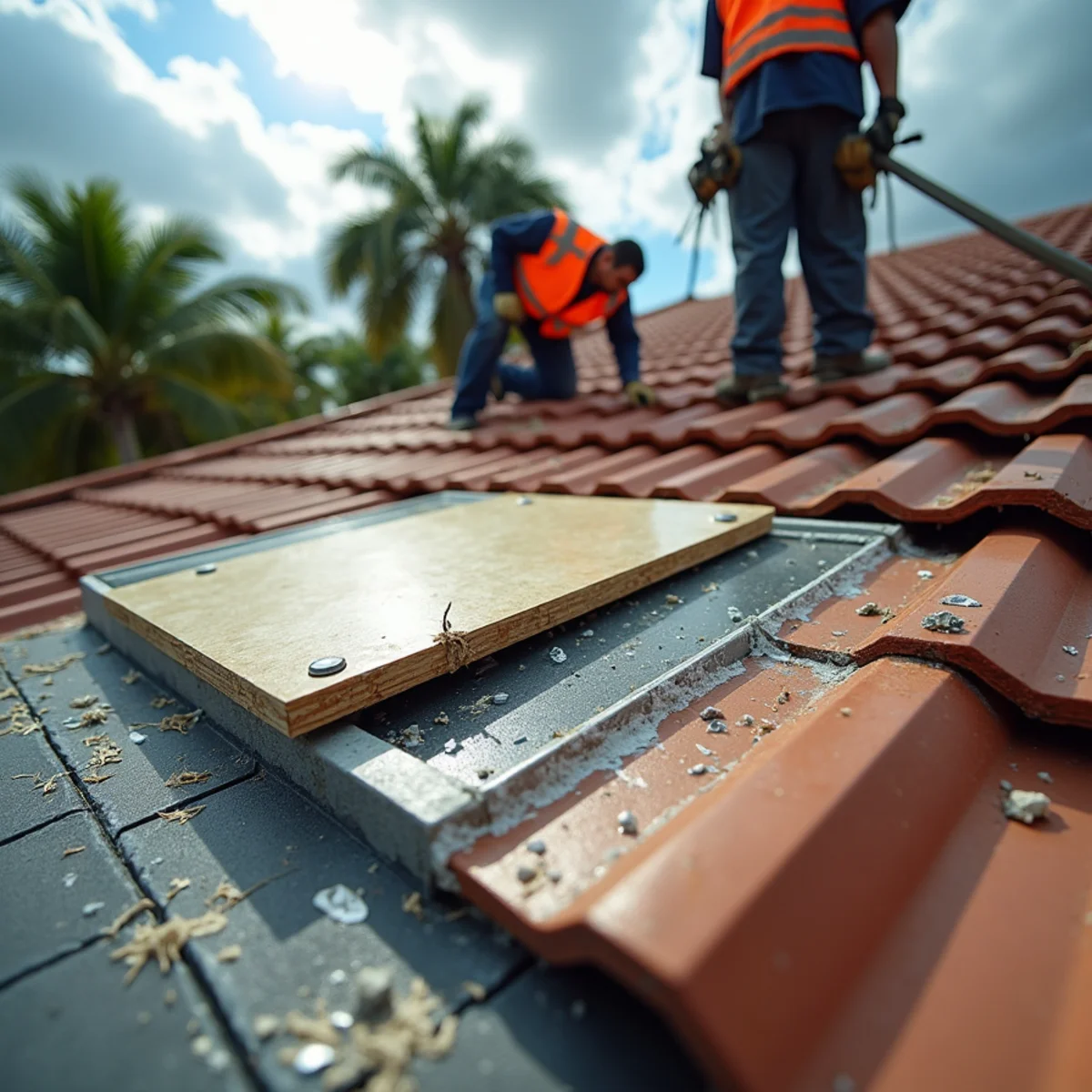
Our first goal on an emergency call is stopping water intrusion with temporary measures, which may mean a secured tarp through our emergency roof tarping service or a quick dry-in of the damaged section. Once the danger has passed, we document everything and plan the permanent fix. For widespread wind damage, see storm damage roof repair.
Reviewed by the Rising Roof Services team · Boca Raton, FL
Situations that call for emergency repair
Not sure whether it counts as an emergency? Call and describe it; we’ll help you decide.
Water coming through a ceiling
Especially near light fixtures or with a sagging ceiling, both of which can be electrical and collapse hazards.
Missing sections of roofing
Exposed underlayment or bare deck won’t hold up through another rain band.
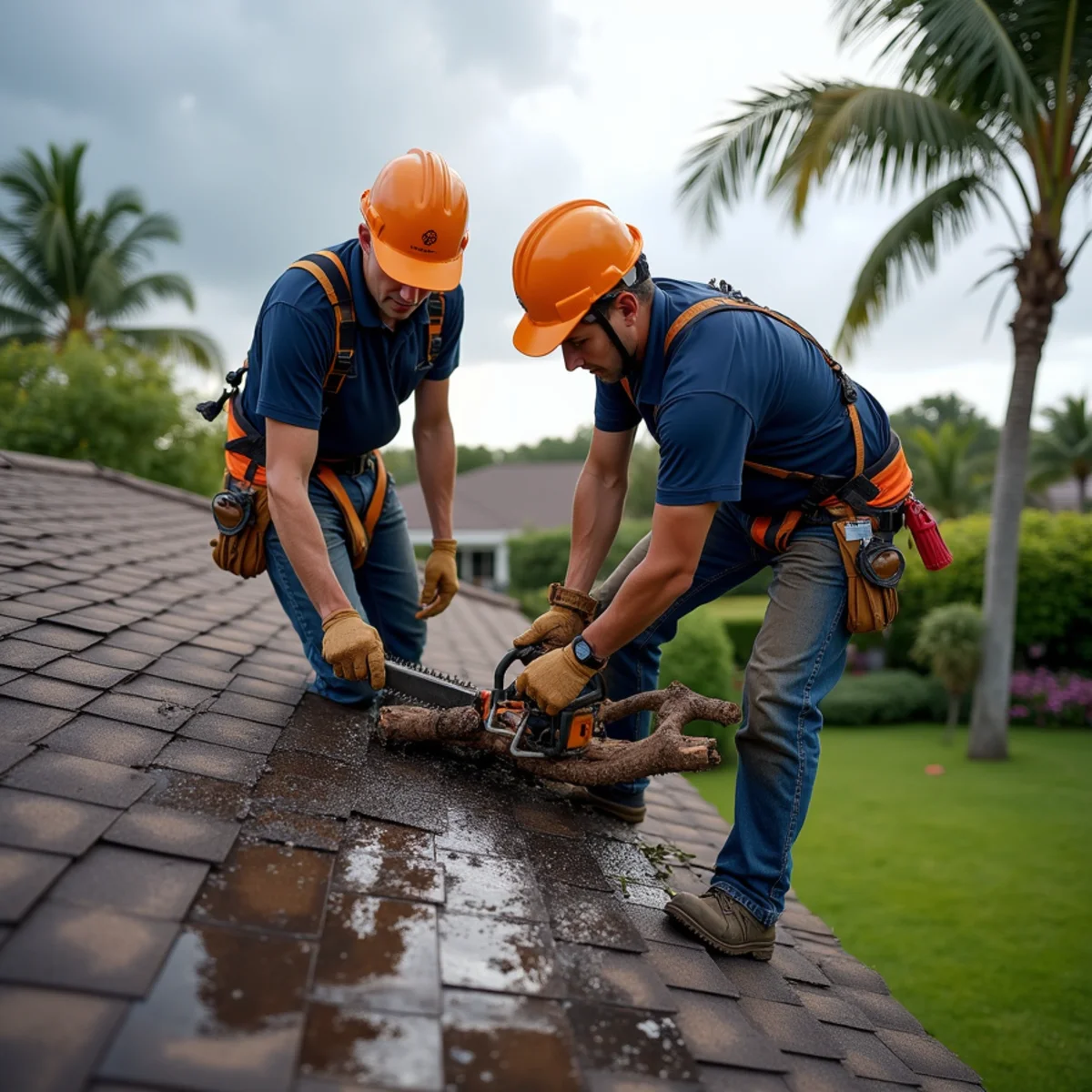
Tree or debris impact
Branches and fronds can puncture decking and break tile over a wide area.
Flapping shingles or loose tile
Loose pieces can tear free in the next gust and damage neighboring roofs and cars.
Broken skylight or dislodged vent
Either one creates a direct opening into the house.
Flashing torn from a wall
Wind-driven rain goes straight behind the stucco and into wall cavities.
What an emergency roof call includes
The aim of the first visit is a dry, safe house and an honest record. This is what that visit delivers.
Triage while you’re on the phone
We help you sort what is urgent from what can wait, and how to protect the rooms below until the crew can safely get on the roof.
Photos before anything moves
Damage is photographed as found, before debris is cleared or a tarp goes on, so the record your insurer sees hasn’t been disturbed.
Loose material made safe
Hanging shingles, loose hip tiles and dislodged vent caps that could turn into wind-borne debris are removed or fastened down.
Temporary protection sized to the damage
A secured tarp, a temporary peel-and-stick dry-in or a sealed opening, chosen for your roof type and the forecast, and marked as temporary on our paperwork.
A look at what the impact reached
Where it is safe, we check the attic below the damage for cracked framing, punctured decking and wet insulation that can’t be seen from above.
Broken pieces kept for the adjuster
A few fallen tiles or torn shingles can be set aside if you want them for your claim, and the rest are cleared from walkways and the pool deck.
A written plan for the lasting fix
Once the roof is stable, you receive an itemized scope for the permanent repair, including any permit or HOA approval it needs.
What happens when you call with an emergency
Safety comes first. We don’t send crews onto a roof during lightning or sustained high wind; temporary protection goes on as soon as conditions allow.
- 1
Call and triage
Tell us what happened, where water is entering and whether anyone is at risk. We’ll give you practical steps to protect the interior in the meantime.
- 2
Assessment and photos
We inspect the damage, photograph it before anything is moved and identify what has to happen immediately.
- 3
Temporary protection
We tarp, patch or dry in the damaged area to stop water intrusion until permanent repairs can be made. Anything temporary is labeled that way on our paperwork, so no one mistakes it for the finished repair.
- 4
Written scope for the permanent repair
Once the roof is stable, you get a written scope for the full repair, with photos you can share with your insurer.
- 5
Permanent repair and cleanup
After any required permit or HOA approval, we make the permanent repair, haul away debris and walk you through the results. The permanent repair has to meet the current Florida Building Code, which can mean more than putting back what was there.
What affects emergency repair costs
Emergency work has two parts: stabilizing the roof now and fixing it properly later. Each is scoped on its own.
- Size of the opening
- One missing section is quicker to secure than damage spread across several slopes.
- Roof type and pitch
- Tarping over tile takes care to avoid breaking more of it; steep or two-story roofs need more rigging.
- Debris removal
- Large limbs or a fallen tree may have to be cleared before temporary work can begin.
- Hidden deck damage
- Impact damage often reaches beyond what’s visible from the surface.
- Permanent repair scope
- The final repair depends on the covering, code requirements and whether a larger section must be replaced.
We provide a written, itemized scope before work starts on the permanent repair, and we document the damage whether or not you file a claim.
Why choose Rising Roof Services for emergency roof repair
A same-day callback, without false promises
Our Google Business Profile shows us open 24 hours, and calls about water coming in or storm damage are returned the same day. We won’t quote an arrival time we can’t keep, especially in the days after a named storm.
Based in Boca, not passing through
We work from 3003 Woodfield Plaza Dr in Boca Raton. After a storm, a local address you can drive to is one of the first things worth checking, and it’s why we suggest the same test for anyone who knocks on your door.
Temporary work labeled as temporary
Tarps and dry-ins are identified as temporary in our photos and paperwork, and the permanent repair gets its own written, itemized scope before any of it begins.
Records an adjuster can follow
Our photo reports separate confirmed storm damage from suspected damage and from older wear. We document the loss; we don’t adjust claims or promise that one will be approved.
Steady crews on a stressful day
Across 31 Google reviews and a 5.0 rating, customers describe crews who stay organized, explain each step in plain language and clean up afterward. That counts for more when there is water on the floor.
5.0 stars from 31 Google reviews · Open 24 hours, 7 days · (831) 666-1600
Insurance after a roof emergency
Photograph damage before anything is moved, and keep receipts for temporary protection; most policies expect you to take reasonable steps to prevent further damage. We provide dated photos, measurements and a written repair scope you can share with your insurer. We are not public adjusters, we can’t promise a claim will be approved, and Florida law prohibits contractors from waiving or rebating deductibles.
During hurricane season
From June through November, one named storm can damage roofs across Palm Beach and Broward counties at once, and roofing schedules fill quickly. Homeowners in Hamptons at Boca Raton, Boca Pointe and coastal Deerfield Beach can get ahead by keeping current photos of their roof on file. Our hurricane tarping checklist lays out what to do in the first hours after a storm.
After the tarp: the next 48 hours
Once water is contained and temporary protection is on, the clock that matters most is drying. EPA guidance calls for getting soaked materials dry in 24–48 hours, before mold takes hold, and a tarp stops new water without removing what is already in the ceiling, insulation or carpet pad. Interior drying is usually handled by a water-mitigation company, scoped separately from the roof.
Use the same window to protect your claim record, without assuming anything about coverage:
- Report the loss to your insurer as the policy requires, and ask what emergency mitigation it expects
- Book drying for wet drywall, insulation and flooring, and keep the moisture readings the drying company records
- Set aside a few broken tiles or torn shingles in case the adjuster wants to see them
- Ask for a written inspection that separates storm damage from older wear on the roof
- Keep one folder for photos, receipts, reports and every message with the insurer
Emergency now, or first thing tomorrow?
Not every roof problem needs a crew tonight, and calling it right keeps the urgent jobs moving after a storm. Use this as a rough guide, and when in doubt, call and describe what you see.
- Call right away if water is near lights, outlets or the electrical panel, a ceiling is sagging, part of the roof is open with more rain forecast, a tree or limb is on the house, or loose pieces could blow off in the next band of wind.
- Book the next available visit if a drip is contained in a bucket and stops when the rain does, one tile is cracked with dry weather ahead, or an old stain hasn’t grown. These still need attention, just not in the dark. Our roof leak repair service handles the tracing.
- Plan an inspection if the storm has passed, nothing is getting in and you only want to know whether the roof took a hit. A roof inspection gives you a dated photo record either way.
When a tree or limb lands on the roof
Tree impacts are the emergencies where order matters most. Keep everyone out of the rooms below, and stay away from any limb touching power lines; report those to Florida Power & Light and let the utility make them safe. Photograph the tree, the roof and the ceilings from a safe spot before anything is cut.
A tree service removes the weight first, because tarping around a limb that is still settling helps no one. Once it is off, we check the rafters or trusses and decking underneath. Cracked framing can mean a structural repair, and sometimes an engineer’s input and a permit, before the roofing goes back on. Temporary protection goes over the opening as soon as the load is gone.
Emergency Roof Repair near you
Based at Woodfield Plaza in Boca Raton, we provide emergency roof repair across West Boca and nearby communities, including:
Emergency Roof Repair FAQs
What should I do while I wait for help?
Get people and pets away from any sagging ceiling, shut off power to wet areas if you can reach the panel safely, and move valuables. Catch water with buckets and towels, and photograph the damage inside and from the ground outside. Don’t climb onto a wet or storm-damaged roof; it is a dangerous place to stand even for professionals.
Is a tarp a permanent fix?
No. A properly secured tarp is temporary protection that keeps water out until the permanent repair is made. Florida sun breaks tarps down and wind can loosen them, so a tarp shouldn’t stay on for long. We plan the permanent repair as soon as practical once the roof is stable.
Can you make emergency repairs on a tile roof?
Yes, though tile needs care. Walking or tarping carelessly over tile breaks more of it. We place fasteners in areas that will be repaired anyway and strap or weight the tarp to avoid damaging good tile. Loose tiles that could become wind-borne debris are removed or secured before the next weather arrives.
How do I avoid storm-chasing contractors?
Be cautious with anyone who knocks unsolicited after a storm, asks for a large payment up front or offers to cover your deductible, which is illegal in Florida. Verify any contractor’s license through the Florida DBPR at myfloridalicense.com, ask for a local address, and get the scope in writing before work starts.
Do emergency roof repairs need a permit?
Temporary protection, such as a tarp or a quick dry-in, usually goes on without waiting for one, because its job is to stop water right away. The permanent repair is different. Depending on its size, it may need a permit from the City of Boca Raton Building Department or, if you live in unincorporated West Boca, from Palm Beach County. After a major storm, watch for emergency guidance from those offices, and make sure your scope says who handles the permit.
What should I have ready when I call?
Your address, the type of roof if you know it, where water is coming in and how fast, and whether a ceiling is sagging or water is near anything electrical. Mention any tree, limb or power line involved. Photos you have already taken help us plan, and a note of when the damage happened is useful later for your insurer.
Do you respond at night or on weekends?
You can call at any hour, since the business is listed as open 24 hours, and an evening or Sunday leak call is returned that same day. Whether a crew can safely work on the roof right away depends on light, wind and lightning. When it can’t, we talk you through protecting the interior and schedule temporary protection as soon as conditions allow.