A tile roof underlayment leak happens when the waterproof layer beneath the tile wears out, tears, or loses its seal around fasteners, walls, or vents. The tile can look perfect while wind-driven rain slips under it and reaches failed underlayment. Lifting tiles in suspect areas is the only reliable way to confirm it.
A tile roof can look perfect from the street and still leak, because the tile is not what keeps the water out. Concrete and clay tile shed most rain and protect what is underneath from sun and debris, but the underlayment beneath the tile is the waterproof layer. When that layer ages out, tears, or is punctured, water that gets past the tile, and some always does, finds its way into the house.
How a tile roof actually handles water
Think of it as two systems stacked together.
- The tile is the shield. It blocks most rain, takes the UV exposure, and resists wind when properly attached.
- The underlayment is the raincoat. Wind-driven rain gets under tile at laps, ridges, and edges, and the underlayment carries that water down to the eave and out.
On older South Florida tile roofs, underlayment was commonly a felt base sheet with a heavier cap sheet on top, often set in hot asphalt for mortar-set tile. Newer installations frequently use self-adhered, peel-and-stick tile underlayment designed to seal around fasteners. Either way, the underlayment has a finite life that is usually shorter than the tile above it.
Which underlayment systems sit under Florida tile?
You will usually find one of three setups, and the permit file for your last re-roof should name the one on your house.
- Two-ply hot-mopped system. A base sheet nailed to the deck, with a heavier mineral-surfaced cap sheet set in hot asphalt on top. The traditional 30/90 system is the best-known version, and it is common under older mortar-set tile.
- Self-adhered tile underlayment over an anchor sheet. A mechanically fastened base or anchor sheet, then a peel-and-stick membrane made for tile. It seals around fasteners and is now widely used with foam-set tile.
- Older single-layer felt. Found on some aging roofs and additions. It offers the least margin once it dries out.
Florida's tile installation guidance, published by the Florida Roofing and Sheet Metal Contractors Association with the Tile Roofing Institute as the FRSA-TRI manual, and each product's approval set how these layers are fastened and how tile attaches to them. The right choice for a new roof depends on slope, wind design, and tile attachment method, which is a conversation for the replacement scope rather than a one-size answer.
Why the underlayment wears out first
Several forces work on it year after year:
- Heat. Attic and deck temperatures under a Florida tile roof run high for much of the year, and asphalt-based materials dry out and become brittle over time.
- Water that sits. Debris dams in valleys and behind tiles keep sections wet longer than they were designed for.
- Fastener holes. On nailed or battened tile, every fastener passes through the underlayment. As the material shrinks and hardens, those holes can open up.
- Exposure through broken tile. A cracked or missing tile lets sun and rain hit the underlayment directly, which speeds up deterioration in that spot.
Where underlayment leaks usually start
Valleys
Valleys carry the most water on the roof. Leaves and seed pods collect under the tile edges, water backs up sideways, and the underlayment and valley metal beneath take the punishment.
Headwalls and sidewalls
Where a roof meets a stucco wall, the flashing and the underlayment turned up the wall have to work together. When either fails, water runs behind the tile and into the wall or ceiling below.
Penetrations
Plumbing vents, exhaust vents, and skylights all interrupt the underlayment. Lead boots can crack or be damaged by animals, and the seal between the underlayment and the flashing ages.
Eaves
At the bottom edge, water leaving the roof crosses the eave closure or bird stop and drip edge. Deteriorated underlayment there shows up as fascia rot and soffit stains.
Signs the problem is under the tile
- Ceiling stains that appear after heavy, wind-driven rain but not after light showers
- Stains that return in a new spot after a tile repair
- Soft or stained decking visible from the attic, often near valleys or walls
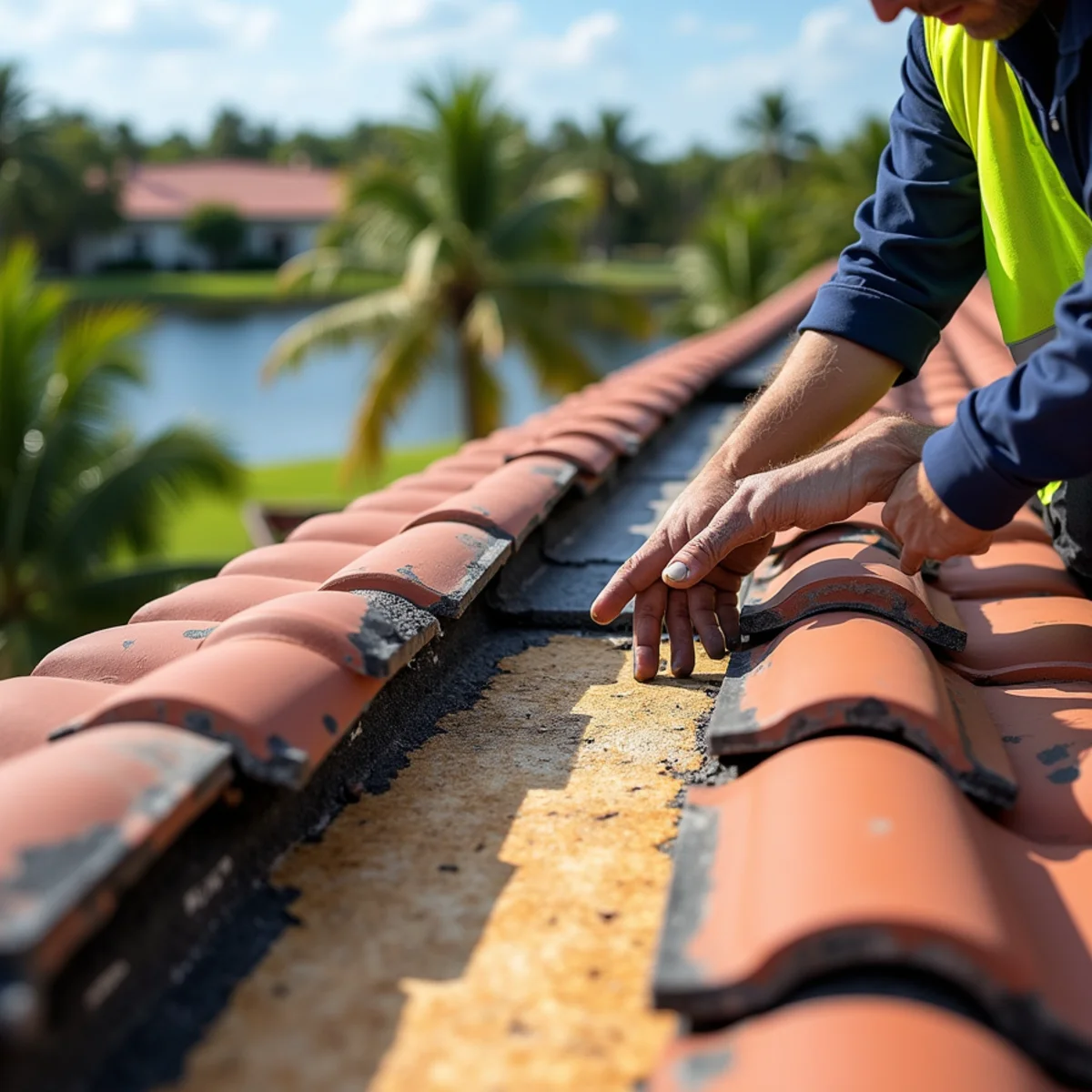
- Brittle, cracked underlayment visible when a roofer lifts a sample of tiles
- A roof in the 20-plus-year range that has never had its underlayment replaced
- Black grit or asphalt granules washing out at the eaves or collecting in the gutters below the tile
- Leaks in several separate spots, or water showing up far from any cracked or missing tile
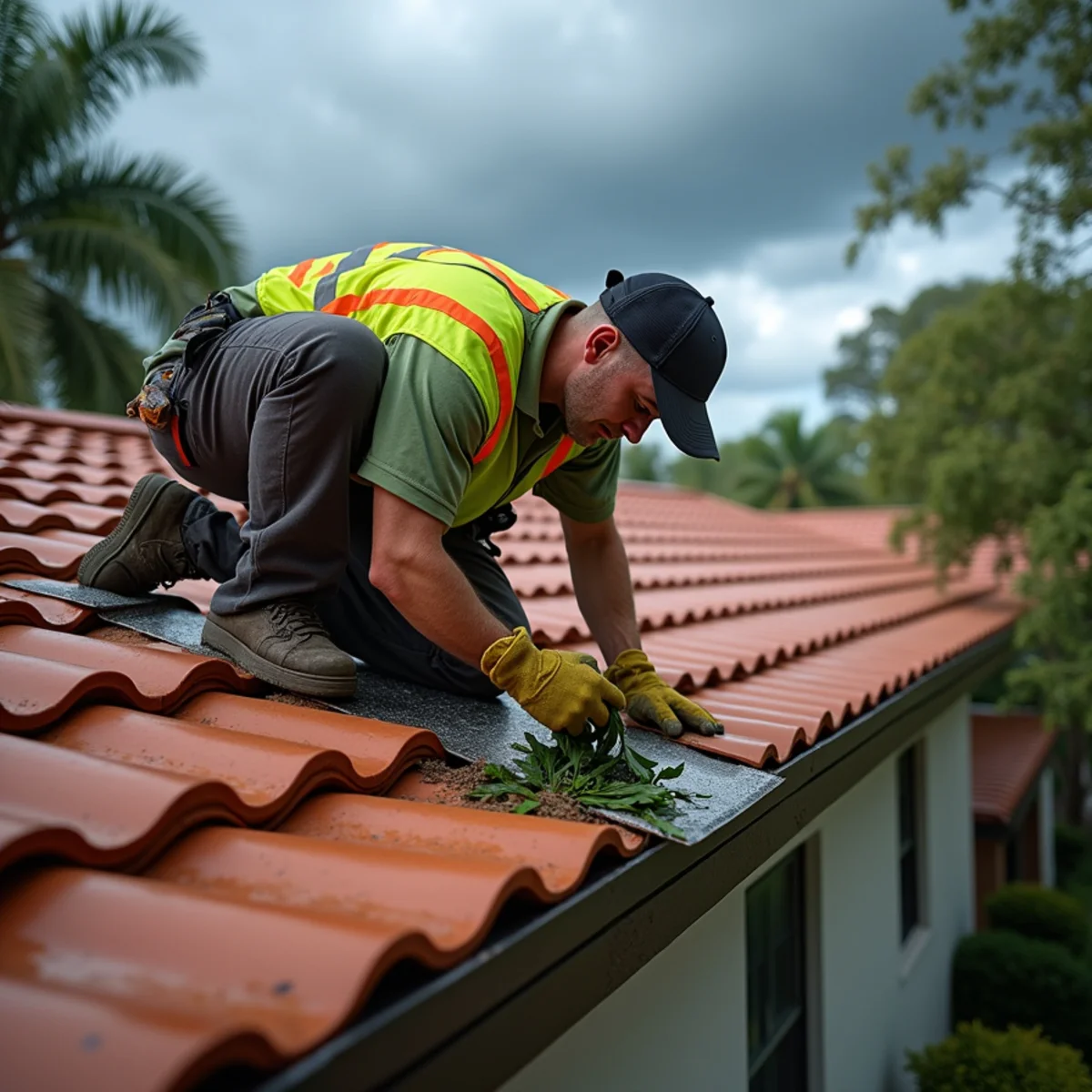
Only a roofer can confirm it, by lifting tiles in suspect areas and looking at what is underneath. Photos of the underlayment at those spots tell you far more than any view from the ground.
On many older tile roofs, the tile has decades left while the underlayment is close to done. Replacing broken tiles will not fix an underlayment that has reached the end of its life.
Repair or replacement?
If the underlayment is sound overall and the leak comes from one valley, one wall, or one penetration, a targeted tile roof repair can work. That means lifting tile in the affected area, repairing or replacing underlayment and flashing there, and resetting the tile. Our roof leak repair process traces the entry point first so the repair goes where the water actually gets in.
If the underlayment is brittle across multiple slopes, spot repairs start chasing leaks around the roof. At that point, tile roof replacement is usually the better investment. The tile comes off, the deck is inspected and re-nailed as required, new underlayment goes down, and the tile goes back on with new or reused material. Whether existing tile can be reused depends on its condition, breakage during removal, and the product approvals and HOA rules that apply.
A re-lay: new underlayment, same tile
Reinstalling your existing tile over new underlayment is often called a re-lay. It keeps the look of the roof, avoids color-matching problems, and saves the cost of new tile. It tends to work when:
- The tile is still strong, not chalky or crumbling at the edges.
- Enough matching tile exists, salvaged or new, to replace pieces that break during removal.
- The tile can be reattached in a way that meets the current product approval and wind requirements for your home.
- Your HOA, if you have one, accepts the existing color and profile going back on.
A re-lay is still a re-roof, so it needs a permit and inspections, and the deck is opened up just as it would be for new tile. If the tile fails any of the points above, new tile is usually the cleaner decision.
Wellington's large tile roofs
In Wellington, many 1980s through 2000s homes carry large, complex tile roofs with long valleys and multiple wall intersections, often on open lots where wind-driven rain is a regular test. Roofs from the earlier end of that range are frequently still on original underlayment. Those are exactly the roofs where the tile looks fine and the leak still comes back.
Habits that help underlayment last longer
- Keep valleys and the areas behind walls and chimneys clear of leaves and seed pods, especially before the rainy season.
- Trim overhanging branches so debris does not pile up and falling limbs do not crack tile.
- Replace cracked or slipped tiles promptly, so the underlayment beneath is not left exposed to sun and rain.
- Ask satellite, solar, and HVAC installers to coordinate with a roofer before walking on tile, since foot traffic is a common cause of cracked tiles.
- Have the roof looked at after major storms, and every few years once it passes 15 years.
In the field: reading the underlayment under your tile
Underlayment does not age evenly across a roof. The south- and west-facing planes take the most afternoon heat, and an attic with poor ventilation cooks the deck from below, so those slopes usually turn brittle first. When we sample a roof, we lift tile in at least three kinds of spots: the first course at the eave, where every drop of water eventually passes; an open field area mid-slope; and next to a wall or penetration. We photograph each one and tell you exactly where we looked.
The condition shows in how the material behaves. Healthy cap sheet or membrane stays pliable and bonded to what is under it. Aged material cracks when flexed, curls at laps, sheds black grit, or has rust streaks running from fastener holes. On foam-set roofs, we also check whether the underlayment is still stuck to the deck, because the tile is glued to the underlayment. If that bond is failing, the tiles above may be less secure in wind than they look.
Sampling a mortar-set roof takes extra care. The mortar under each tile bonds to the cap sheet, so lifting a tile can tear the very layer we are trying to evaluate. Those spots are patched with compatible material before the tile goes back, and we plan fewer, better-chosen samples rather than lifting tile all over the roof.
The honest limit is that sampling is a sample. A handful of test spots can show a clear pattern, but they cannot show every square foot. If the results are mixed, we will say so and explain which areas are most likely to fail next, instead of presenting a guess as a certainty.
Find out what is under your tile
If your tile roof has leaked more than once, or it is old enough that the underlayment has never been replaced, it is worth looking beneath the surface. Rising Roof Services lifts tiles in the areas that matter, photographs the underlayment, and tells you honestly whether repair or replacement makes sense. Call (831) 666-1600 or request an inspection.
Frequently asked questions
How long does tile roof underlayment last in South Florida?
It varies with the material, how it was installed, attic heat, and how well the roof has been maintained. Older felt systems often show wear well before the tile does, while modern self-adhered underlayments are designed for longer service. The reliable way to know is to have a roofer lift tiles and look at its condition directly.
Can my existing roof tiles be reused when the underlayment is replaced?
Sometimes. Intact tiles can be removed, stored, and reinstalled over new underlayment, which helps with matching. Some breakage during removal is normal, and older or discontinued profiles can be hard to replace. Product approvals and HOA requirements may also affect the decision, so your roofer should evaluate the tile before planning to reuse it.
Why does my tile roof leak only during heavy storms?
Light rain is mostly shed by the tile. Heavy, wind-driven rain pushes water under tile laps, ridges, and edges, where the underlayment has to handle it. If the underlayment is brittle, torn, or poorly sealed around penetrations or walls, those storm-only leaks are often the first sign.
Is a tile re-lay cheaper than installing new tile?
It can be, because the biggest material cost, the tile, is reused. The savings shrink when a lot of tile breaks during removal, when the profile is hard to source, or when careful handling adds labor. A written scope should state the expected breakage allowance and where replacement tile will come from, so you can compare a re-lay and new tile on the same terms.
Does homeowners insurance cover worn-out tile underlayment?
Generally not. Underlayment that has dried out and cracked with age is treated as wear and maintenance, which standard policies exclude. Sudden damage is different: if a storm broke tile and the exposed underlayment was torn or soaked as a result, that damage may be part of a covered loss. Your policy wording and the insurer's inspection decide.