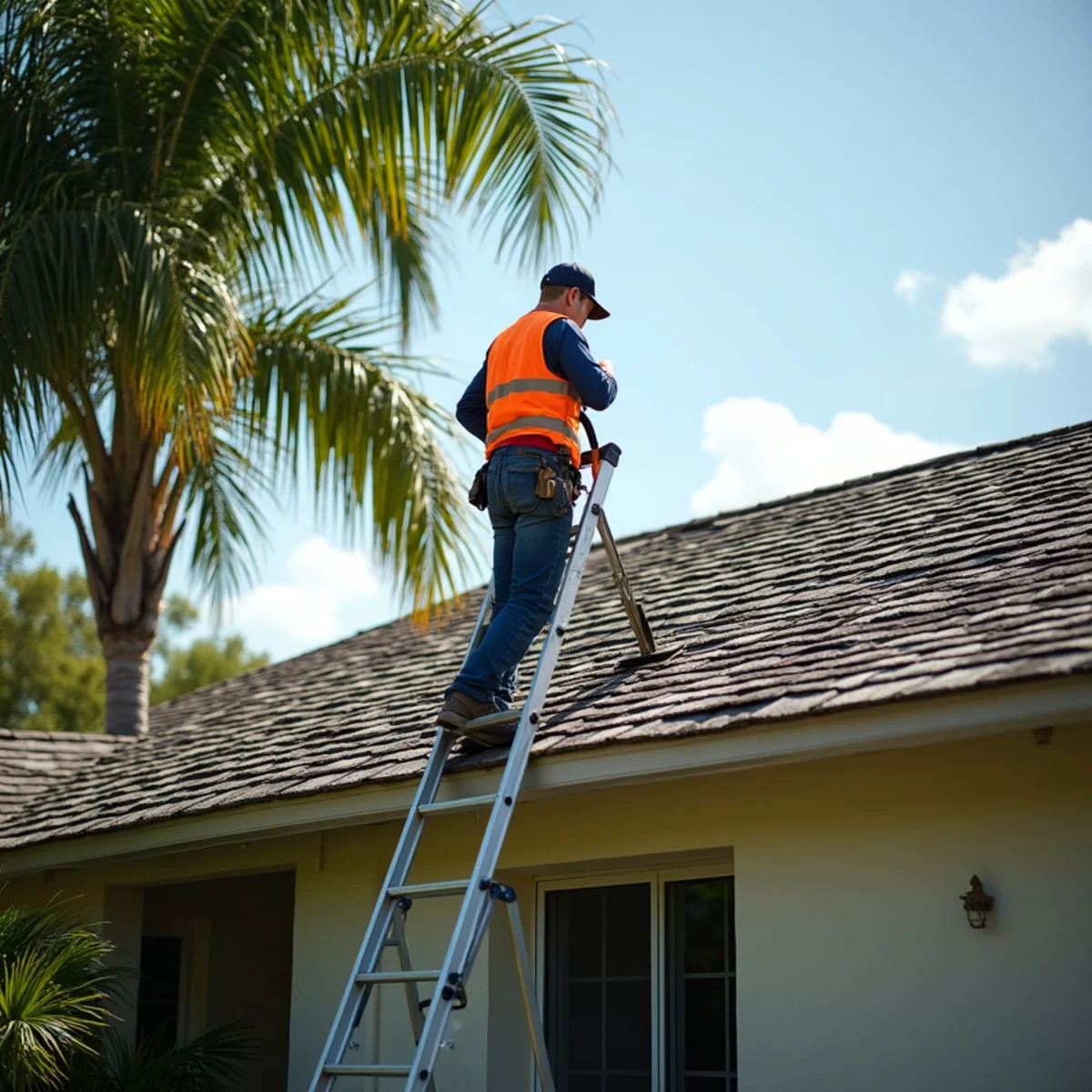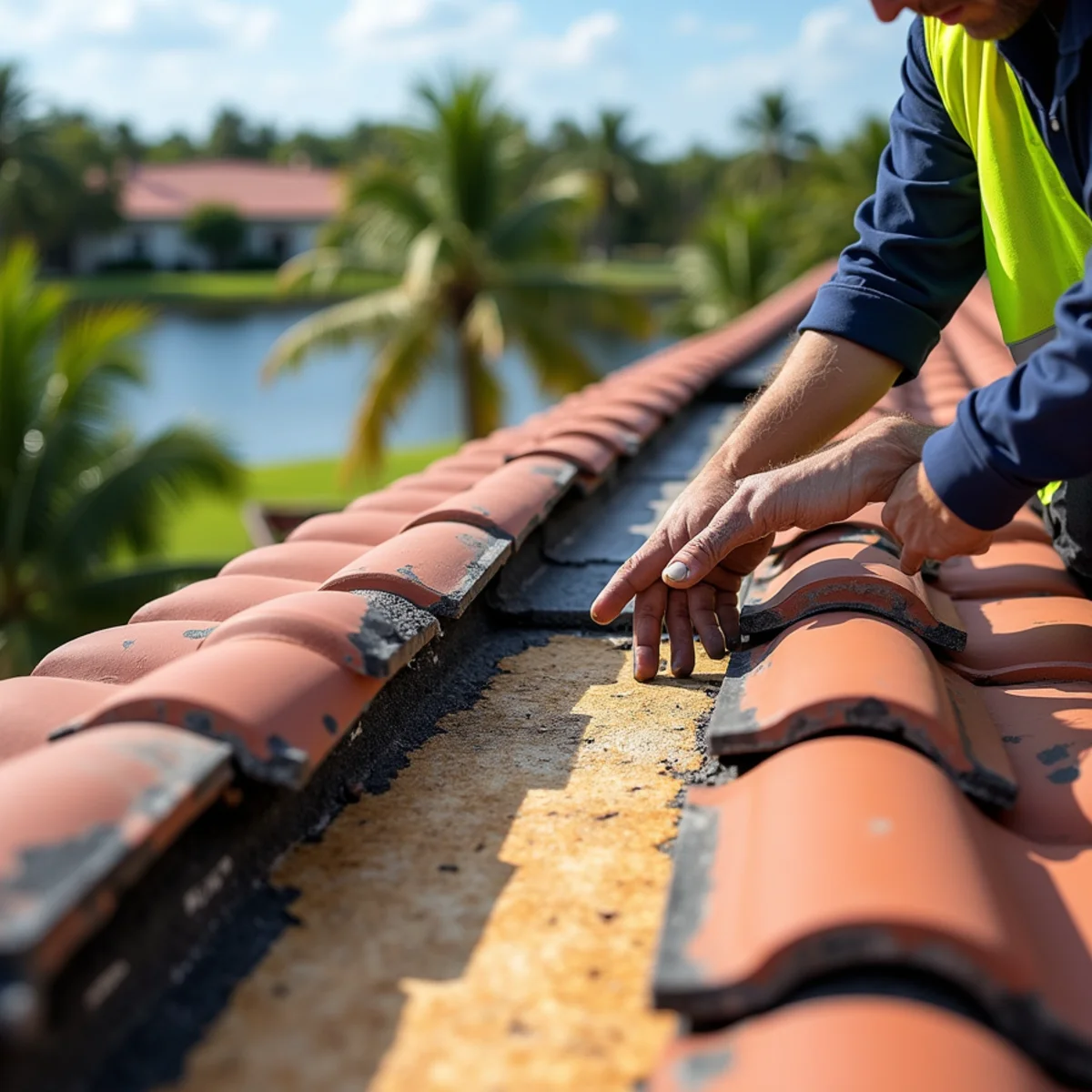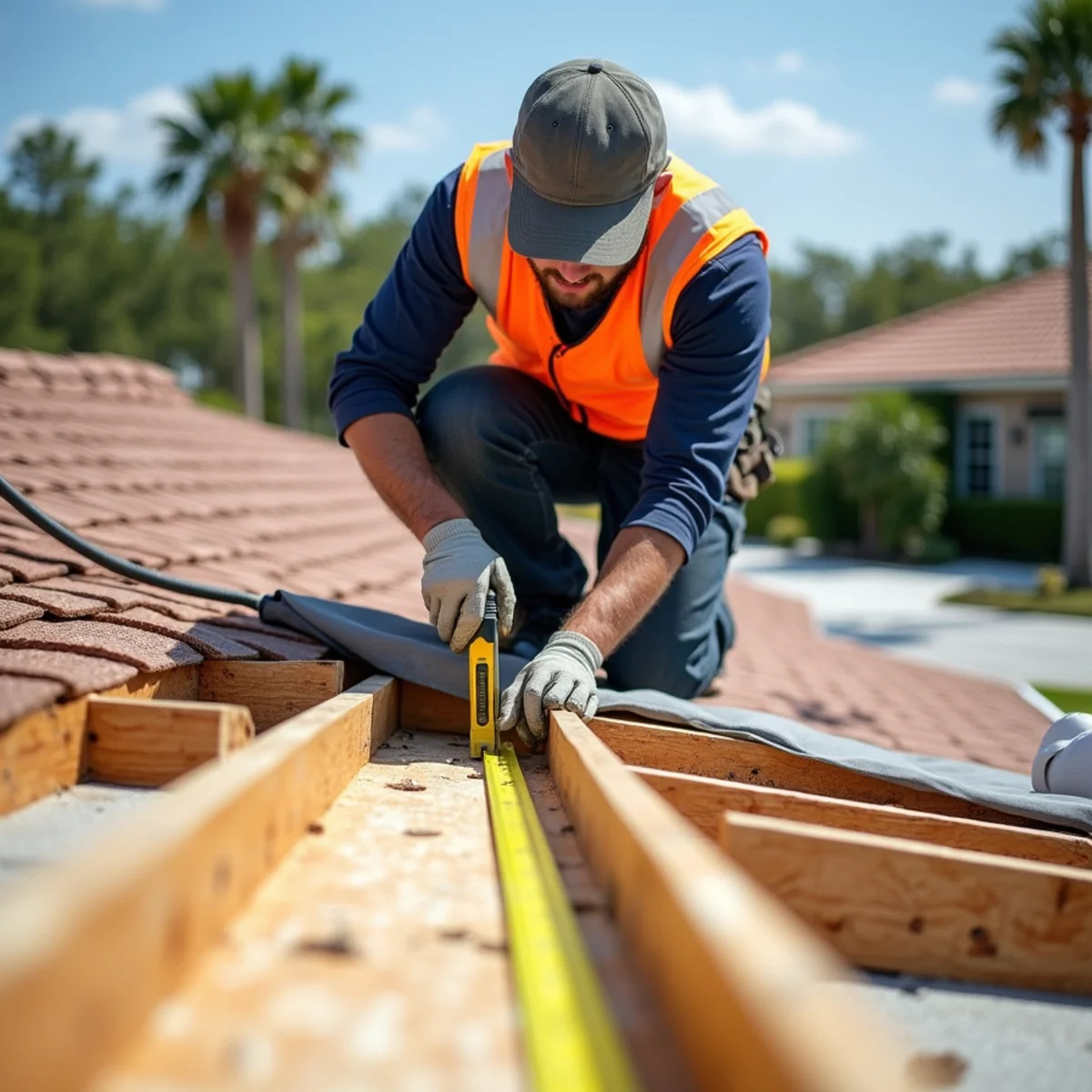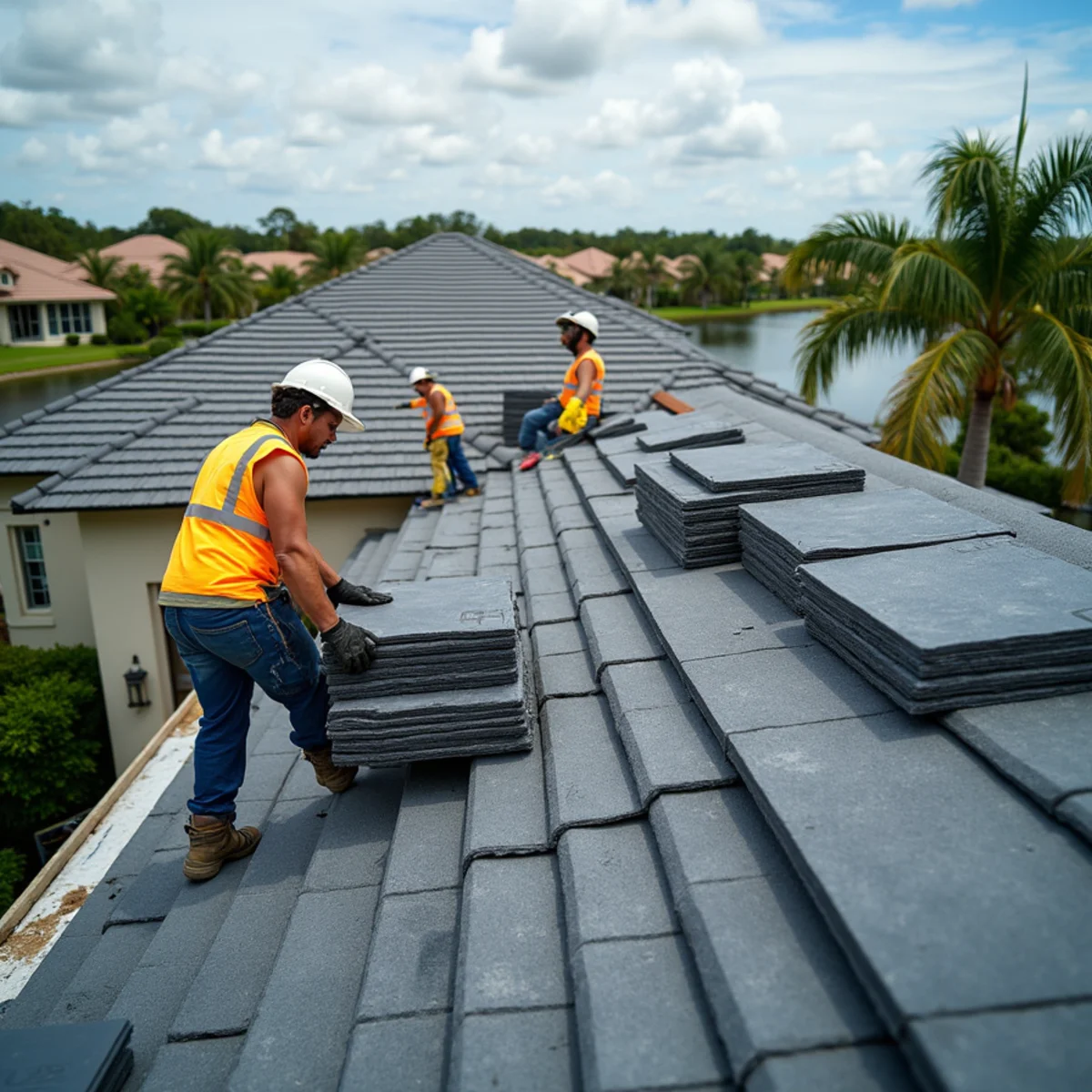
HVHZ roofing in Parkland means every regulated roof component needs a Miami-Dade NOA or an HVHZ-specific Florida approval, installation follows the stricter High-Velocity Hurricane Zone provisions of the Florida Building Code, and the city inspects more stages. A system that passes in Boca Raton may not be allowed in Parkland at all.
Parkland sits just across the county line from West Boca, a short drive from many Boca Raton neighborhoods. On a map, a re-roof in Parkland looks almost identical to one in Sandalfoot Cove or Boca Pointe. Under the Florida Building Code, it is not. Parkland is in Broward County, and Broward is part of the High-Velocity Hurricane Zone, or HVHZ. That one fact changes product selection, installation details, paperwork, and inspections.
What the HVHZ Is
The Florida Building Code designates Broward and Miami-Dade counties as the High-Velocity Hurricane Zone. Inside it, roofing follows a separate, stricter set of provisions in the code, along with testing and application standards developed for the region's wind conditions.
Palm Beach County, including all of Boca Raton, is outside the HVHZ. It still has high design wind speeds and sits in the wind-borne debris region, so roofs there are hardly built loosely. But the HVHZ rules are more prescriptive, and the approval path for materials is narrower.
Product Approvals: The Biggest Practical Difference
In the HVHZ, regulated roofing components must carry an approval that is valid for high-velocity use. In practice, that means a Miami-Dade Notice of Acceptance (NOA) or a Florida Product Approval that specifically covers HVHZ use.
This reaches well beyond the tile or shingle. Underlayment, adhesives, fasteners, flashing, and some vents may all need HVHZ-rated approval. A product routinely installed in Palm Beach County may not be approved for a Parkland roof.
When you review a quote for a Parkland re-roof, ask:
- Which NOA or HVHZ product approval covers the roof covering?
- Is the underlayment approved for HVHZ use with that covering?
- For tile, what attachment method and uplift values apply?
- Will copies of the approvals be included in the permit package?
NOA or Florida Product Approval: Reading the Fine Print
A Miami-Dade NOA is accepted statewide, so the same tile can be permitted in Boca and Parkland. The reverse does not hold: a Florida Product Approval only works in Broward if it specifically lists HVHZ use. Either document also sets limits, such as the minimum roof slope, the deck type, the underlayment it was tested with and the maximum design pressure it can resist. An approval can also expire or be revised, so the version in the permit package should be current on the day it is submitted. Asking your roofer to show you those limits for your roof is a fair request, not an insult.
Installation Details That Tend to Differ
The HVHZ provisions spell out installation more precisely. Specifics depend on the roof system and its design, but homeowners most often notice differences in four areas:
- Underlayment: Requirements for the type, number of layers, and attachment of underlayment beneath tile or shingles.
- Tile attachment: Tile must go on by its approved method, whether adhesive, mortar, or mechanical fasteners, with uplift resistance documented for each wind zone of the roof.
- Edge and flashing metal: Gauge, fastening, and installation of drip edge, valley metal, and wall flashing follow specific requirements.
- Deck fastening: Nailing schedules are defined, and any deck repairs have to meet them.
None of this is visible once the roof is finished, which is exactly why the inspections matter.
How Do HVHZ Testing Standards Show Up on Your Roof?
Behind the HVHZ rules sits a set of Testing Application Standards, usually shortened to TAS. Manufacturers rely on several of them, such as TAS 100 for wind and wind-driven rain resistance, to earn their approvals. Homeowners rarely hear about those lab tests, but one standard can show up on the job itself.
For adhesive-set and mortar-set tile, the HVHZ provisions call for a field uplift check under TAS 106 once the tile is installed and before the final inspection. A sample of tiles is pulled with a gauge to confirm they are bonded to the roof as the approval requires. Tiles that fail get reset, and the area is checked again. Ask your contractor who performs that check on your job and how the results are recorded, since the exact procedure and paperwork can vary by building department.
Shingle roofs have their own HVHZ details. Fastening patterns commonly call for more nails per shingle than a standard installation, and the approval for the specific shingle sets the number and placement.
Permits and Inspections in Broward
Broward cities, including Parkland, run their own building departments. For roofing, Broward jurisdictions commonly use a uniform roofing permit application, and HVHZ projects typically require product approval documents and attachment calculations with the submission. Confirm current forms and procedures with the city before filing.
The inspection sequence is generally more involved than on a typical Palm Beach County re-roof. Expect inspections at key stages such as deck and underlayment, during tile or shingle installation, and at final. An inspector who finds an unapproved product or an incorrect detail can hold the job until it is corrected.
A roofer who works mainly north of the county line may be excellent, but ask specifically about their HVHZ experience before hiring them for a Parkland roof.
Parkland's Housing and Roof Profile
Much of Parkland was built out from the 1990s onward, with large single-family homes, many under concrete tile, in gated and HOA-governed neighborhoods. Many of those roofs are now old enough that the original underlayment is nearing the end of its service life, even when the tile looks fine from the street.
That makes tile roof replacement a common conversation for Parkland owners: whether to reuse or replace tile, what underlayment to install, and how to meet current HVHZ attachment requirements. Homes with dimensional shingles face the same product-approval discipline during a shingle roof replacement, including HVHZ-approved underlayment and edge metal.
HOA architectural approval is usually required on top of the permit, particularly when tile color or profile will change.
Budget and Timeline Expectations
Stricter materials and more inspection stages affect both price and schedule. HVHZ-approved products may cost more or carry longer lead times, and each inspection adds a hold point. Build extra time into your plans and aim for the drier months of November through April when you can.
Repairs follow the same logic. Replacing a section of tile or flashing on a Parkland roof still calls for HVHZ-approved materials installed to their approved method. A repair made with leftover stock from a Palm Beach County job can fail inspection or leave a mismatch in the approved system. Keep your roof's permit and product approval records on file; they make future repairs faster to plan and easier to permit.
There is an upside. A roof built to HVHZ standards is designed for high-velocity wind. Improvements such as secondary water resistance and deck re-nailing to current schedules are also what a wind mitigation inspector looks for, and our hurricane roof upgrades page explains how they fit into a re-roof.
The Same Rules Across Broward
The HVHZ covers all of Broward County, so the same approach applies in Coral Springs, Coconut Creek, and every Broward city south of Parkland. If you are moving from a Boca home to a Parkland home, or own property on both sides of the line, expect two different sets of roof requirements.
On the Job: Running a Re-Roof Across the County Line
Working a few miles south of Boca changes the day-to-day of a re-roof more than the finished roof suggests.
- Material staging is checked twice. Supply houses stock both HVHZ and non-HVHZ products, and they can look identical on a pallet. We match labels on delivered underlayment, fasteners and tile to the approvals in the permit package before anything is loaded.
- Approval copies ride with the job. Inspectors can ask to see the NOA or product approval on site, so a printed set stays with the permit card.
- Dry-in waits for the inspector. After underlayment goes down, tile loading holds until the in-progress inspection passes. On a summer afternoon that means the self-adhered layer carries the roof through a storm or two, so laps and edges get extra attention.
- Deck repairs get documented as they happen. Parkland homes from the 1990s and 2000s usually have plywood or OSB decks. Replaced sheets and re-nailing are photographed before they are covered, because nobody can see them afterward.
Honest trade-offs come up too. HOA-approved tile colors in a gated Parkland community may be limited to a few profiles that also carry HVHZ approvals, which narrows choices. Foam adhesive and mechanical fastening can both be approved, and the right pick depends on tile weight, roof pitch and the uplift the roof zones need, not on which one is cheaper.
Planning a Parkland Re-Roof
A Parkland re-roof is a Broward project under HVHZ rules, even if it is minutes from Boca. Rising Roof Services works on both sides of the county line and plans material approvals, attachment, and inspections around the code that applies to your address. Call (831) 666-1600 to discuss your roof.
Frequently asked questions
Can I reuse my existing tiles on a Parkland re-roof?
Sometimes. Reusing tile depends on the tile's condition, whether the product still has a valid approval for HVHZ use, and whether it can be installed to a currently approved attachment method. Breakage during removal also has to be planned for. Many owners find new tile simpler, but an inspection of the existing tile and its documentation will tell you whether reuse is realistic.
Why do HVHZ roofs cost more than Palm Beach County roofs?
The difference comes from narrower product choices, specific underlayment and attachment requirements, heavier documentation, and additional inspection stages that add time on site. None of those costs are optional in Broward. When comparing quotes across the county line, compare scopes line by line rather than totals, because a Palm Beach County scope may not meet HVHZ requirements.
Is a Miami-Dade NOA product also allowed on a Boca Raton roof?
Generally yes. A Miami-Dade Notice of Acceptance is recognized across Florida, so an NOA-listed tile or underlayment can usually be permitted in Palm Beach County as well. It still has to be installed exactly as the approval describes. The opposite direction is where problems arise, because a product approved only for use outside the HVHZ cannot go on a Parkland roof.
Does Florida's 25% roof repair rule apply the same way in Parkland?
The 2022 state law changed how the 25% rule treats newer roofs, those installed under the 2007 code onward, but HVHZ projects follow their own code chapter and local interpretation. How much of a damaged Parkland roof can be repaired without full replacement is a question for the City of Parkland building department. Get their answer in writing before deciding between repair and re-roof.