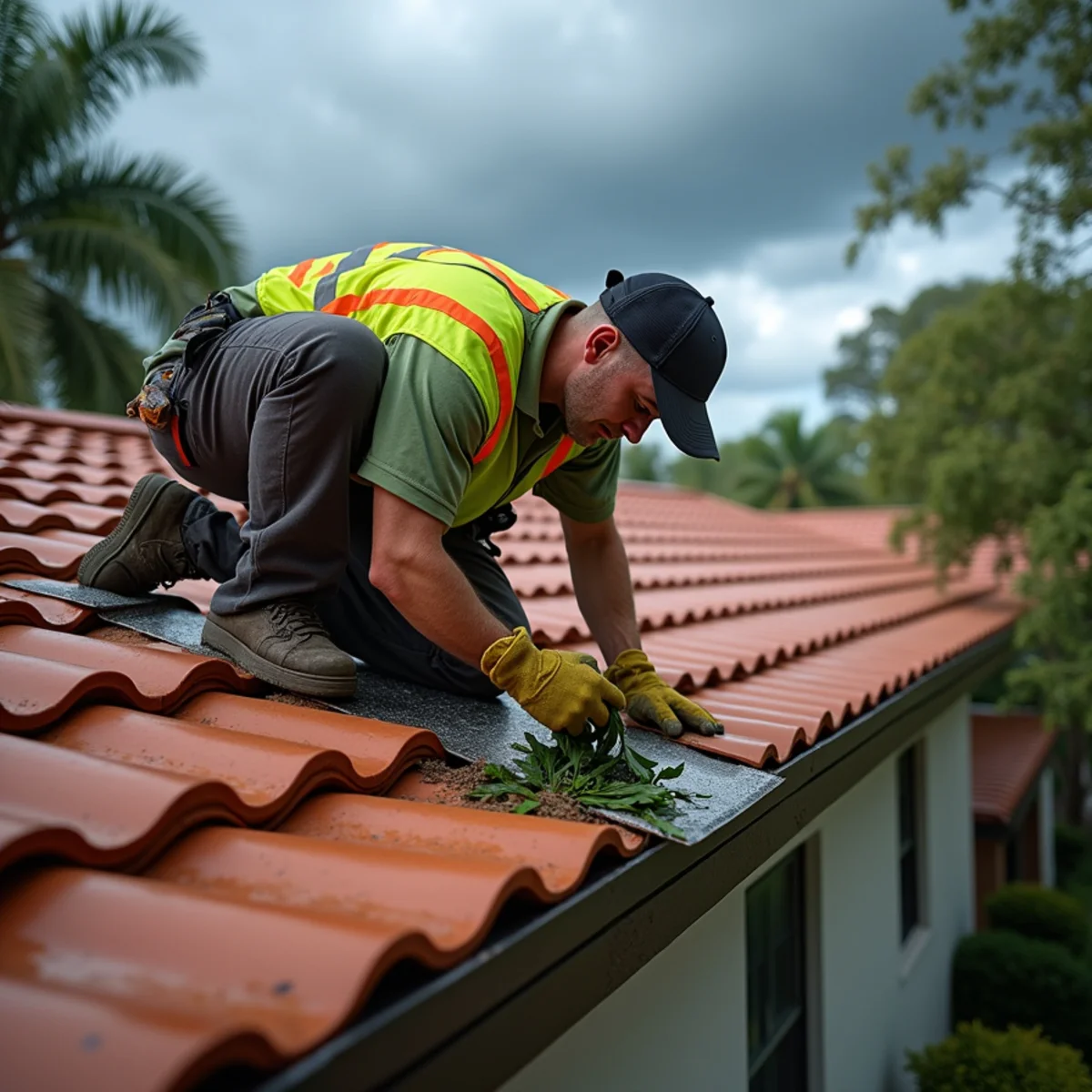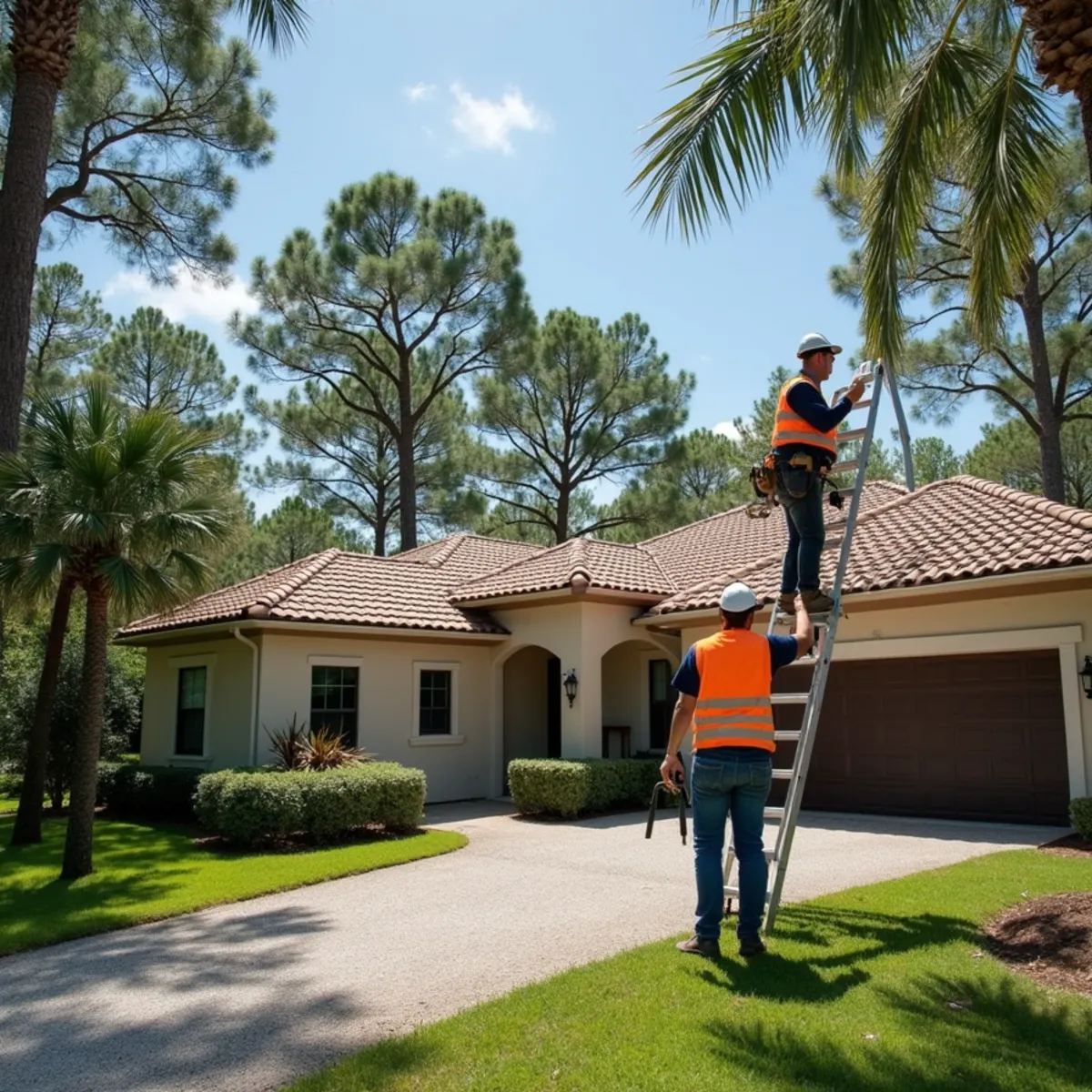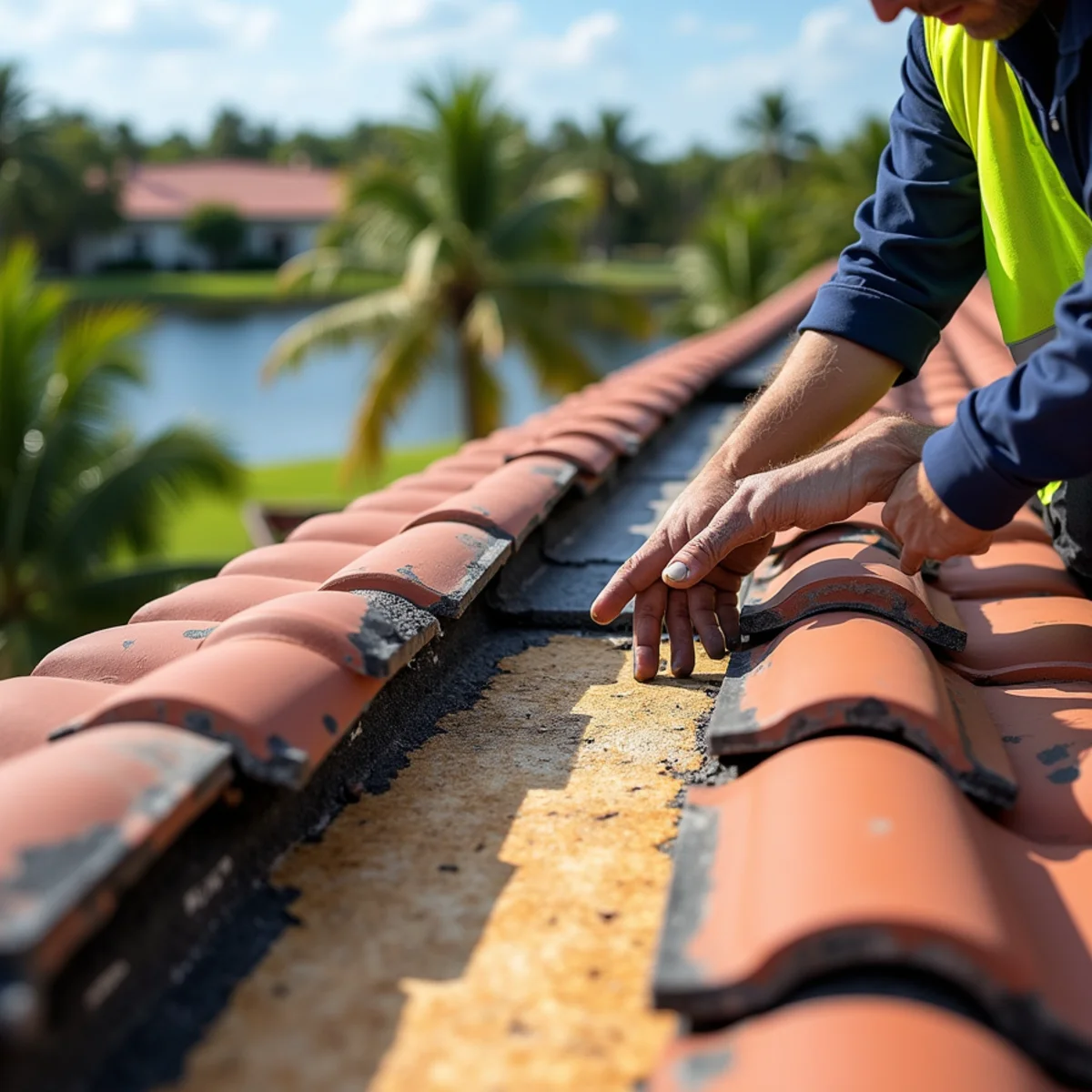
Storm damage looks different on each roof. On shingles, check for creased, lifted, or missing tabs, torn ridge caps, and heavy granule wash in the gutters. On tile, check for cracked or broken pieces, tiles slipped out of line, and missing or shifted hip and ridge caps. Photograph it all before cleanup and book an inspection before the next rain.
Shingle roofs and tile roofs fail differently in wind. Shingles lift, crease, and peel. Tiles crack, slip, and lose their hip and ridge caps. Knowing which signs belong to which roof helps you spot trouble from the yard after a storm, decide whether a professional needs to look, and describe what you saw accurately when you call.
How to look without climbing
You can learn a lot from the ground if you go about it methodically.
- Walk the full perimeter, including the side yards most people skip.
- Use binoculars or your phone's zoom, and photograph anything that looks off.
- Look early or late in the day. Low sun throws shadows that make lifted edges and gaps easier to see.
- Check the lawn, driveway, pool deck, and screen enclosure roof for fragments before you clean up.
- Look from across the street as well. Distance lets you compare the pattern of one slope against another.
Leave the ladder in the garage. Storm-soaked roofing is slippery, and walking on tile causes damage of its own.
Shingle roofs: what wind does
Creased and lifted shingles
Wind gets under the leading edge of a shingle, breaks the sealant strip that bonds it to the course below, and flexes it upward. When the gust passes, the shingle often lies back down, but a horizontal crease line remains across the tab. From the ground, creased shingles can look like a faint straight line or a slight change in how light reflects. Once the seal is broken, the next storm lifts that shingle more easily.
Missing tabs and exposed underlayment
Fully missing shingles are easier to spot: a rectangle in a different color, often showing black underlayment or tan decking. Look closely at the edges of the roof and near the ridge, where uplift forces are strongest.
Granule loss
Heavy granule wash in gutters or at the bottom of downspouts after a storm can mean shingles were scoured or abraded. Some loss is normal on an aging roof, but dark bald patches on the slope are worth documenting.
Ridge and hip shingles
Cap shingles on ridges and hips sit at the highest exposure point. Torn or missing caps are one of the most common storm findings on shingle roofs.
Tile roofs: what wind and debris do
Cracked and broken tiles
Concrete and clay tile are strong in compression but brittle on impact. Flying branches, patio furniture, and debris from neighboring roofs chip corners and crack tiles through. Hairline cracks rarely show from the ground, but broken corners and missing pieces often do.
Slipped or displaced tiles
When a tile loses its bond, whether mortar that has aged and cracked or foam adhesive that has let go, it can slide down out of line. From the ground it looks like a break in the pattern, a tile sitting lower than its neighbors, or a visible gap with underlayment showing through.
Hip and ridge damage
Hip and ridge tiles take the most wind. Look for caps that are missing, shifted, or tilted, and for gaps where the mortar or foam beneath them has failed.
Tile pieces in the yard
Pick up and keep fragments after you photograph where they landed. The color and profile help a roofer look for matching replacements, which is not always simple on older roofs.
Signs that show up on both roof types
- Bent or lifted drip edge and loose gutters
- Pipe boots, vents, or roof jacks that are tilted or missing caps
- Flashing pulled away from walls or chimneys
- Soffit and fascia panels blown out, which can expose the attic to wind-driven rain
- New ceiling stains or damp attic insulation, even when nothing is visible outside
Why does wind damage start at the edges and ridges?
Wind does not push a roof down so much as pull it up. As air speeds over the house, it creates suction on the roof surface, and that suction is strongest along the eaves, at the rakes, around the corners, and at the ridge line. The design standards behind the Florida Building Code assign those zones higher wind pressures for exactly this reason.
That pattern gives you a search order from the yard. Start with the corners of each slope, then the eave line, then the hips and ridge. Damage that shows up in the middle of a slope with nothing wrong at the edges is less typical of wind and more often points to impact from a limb or flying debris.
Is it storm damage or just an old roof?
This question matters for your claim, because insurers generally cover sudden damage from an event and not gradual wear. A roofer cannot decide coverage, but the difference often shows on the roof itself.
More consistent with a recent storm:
- Tile breaks with clean, light-colored fracture edges and no dirt or algae in the crack
- Shingle creases or missing tabs concentrated on the slopes that faced the wind
- Fresh fragments in the yard that match the roof, found right after the storm
- Bent drip edge, torn caps, or dislodged vents that were intact before
More consistent with age and sun exposure:
- Shingles curling or cupping evenly across every slope, not only the exposed ones
- Blistering and bald patches spread across the roof rather than clustered at edges
- Old cracks in ridge mortar with dark staining or growth inside them
- Brittle, faded tile that crumbles at the edges without an obvious impact point
Most older roofs show some of both. A report that separates the two, with photos of each, is far more useful to you and your insurer than one that calls everything storm damage.
Does hail damage look different?
Hail is less frequent here than wind, but summer thunderstorms do bring it. On shingles, a hail strike usually leaves a dark spot where granules were knocked off, sometimes with a soft, bruised feel underneath, and the marks appear in a random scatter rather than a line. On tile, look for chipped corners and small star-shaped cracks on the upper surface.
What you cannot see from the ground
Some of the most important storm damage is invisible from the yard. Tiles can crack underneath the course above them. Foam-set tiles can release their adhesion without moving. Underlayment can tear under a tile that looks fine. On shingles, a broken seal strip may leave no visible crease at all.
That is why a professional roof inspection after a significant storm is worth considering, particularly if you plan to file a claim. A roofer can check tile attachment by hand, lift a sample of shingles to test the seal, and photograph conditions at the roof surface. If the inspection finds damage, storm damage roof repair can address it before the next round of weather gets in.
Photograph first, clean up second. Debris in the yard and damage on the roof are both part of the record once you start a claim.
Why Sandalfoot Cove roofs deserve a close look
In Sandalfoot Cove, near the Broward County line, many single-family homes date to the 1970s and 1980s and are on their second or third roof. That mix means a single street can have dimensional shingles, flat tile, and barrel tile side by side, each showing damage in its own way. Older replacement roofs there may also predate the attachment requirements in newer editions of the Florida Building Code, which is worth knowing when you evaluate damage.
What we see when we walk a roof after a storm
The damage you can photograph from the yard is usually the smaller part of the story. On a tile roof, we test attachment by hand across each slope. A tile that rocks, clicks, or lifts under light pressure has lost its foam or mortar bond, even if it never moved out of line. When we find one, we check the tiles around it in a pattern, because adhesive tends to let go in groups rather than one piece at a time.
On shingle roofs, we gently lift the lower edge of a few shingles on every slope to see whether the sealant strip is still bonded. Where it has released, the adhesive often shows a clean, shiny surface or dust on the strip. We do this early in the day where possible, because shingles softened by afternoon heat scuff and tear more easily under foot.
Walking a storm-damaged tile roof takes discipline. Weight goes where each tile is supported by the course beneath it, never on the unsupported middle, and crews keep to as few paths as the inspection allows. A careless walk can add broken tiles to the count, which muddies the record of what the storm actually did.
The honest part of the job is saying when a roof has two problems. Modest storm damage on a roof that is also near the end of its service life is a common combination. We note both in writing and label which findings look recent and which look like long-term wear, so you and your insurer are working from the same facts.
Next steps after you spot something
If you see creased shingles, slipped tiles, or missing caps, write down the date of the storm and gather your photos. Then have the roof looked at before the next heavy rain. For isolated broken pieces, tile roof repair or a shingle patch may be all it takes. For widespread lifting, the scope may be bigger.
Rising Roof Services inspects both shingle and tile roofs across West Boca and surrounding areas. Call (831) 666-1600 or request an inspection, and we will document what we find with photos and explain it plainly.
Frequently asked questions
Can creased shingles be repaired, or do they need to be replaced?
Once a shingle is creased, the mat is weakened along that line and the sealant bond is broken, so resealing alone is usually a short-term fix. Individual creased shingles can often be replaced if matching product is available. When creasing is spread across multiple slopes, a larger repair or replacement conversation may be necessary.
Is it normal to find a few broken roof tiles after a storm?
It is common, especially near hips, ridges, and eaves, and around trees. Even a few broken tiles matter, because the tile protects the underlayment from sun and debris. Left open, the underlayment beneath can deteriorate faster and start leaking. Replacing broken tiles promptly is usually a modest job compared with fixing the damage that follows.
Should I get a roof inspection even if I do not see damage?
After a strong storm, it is reasonable, particularly if the roof is older or you plan to file a claim. Several important failures, such as released foam adhesion, broken shingle seals, and cracked tiles under the course above, are not visible from the ground. An inspection with photos gives you a clear record either way.
Does a tile roof or a shingle roof hold up better in a hurricane?
Each has strengths. Concrete tile is heavy and resists uplift well when it is attached to current standards, but it cracks from flying debris and is only as good as the underlayment beneath it. Wind-rated shingles installed with the right nailing pattern also perform well. In practice, the age of the roof and the quality of the installation usually matter more than the material.
How soon after a storm should I have my roof checked?
Within days if you see anything unusual, and before the next heavy rain if you can. Early photos tie the damage to a specific storm date, and small openings get worse quickly in summer weather. Florida policies also set deadlines for reporting a claim, so read your policy or ask your agent about the time limit that applies to you.